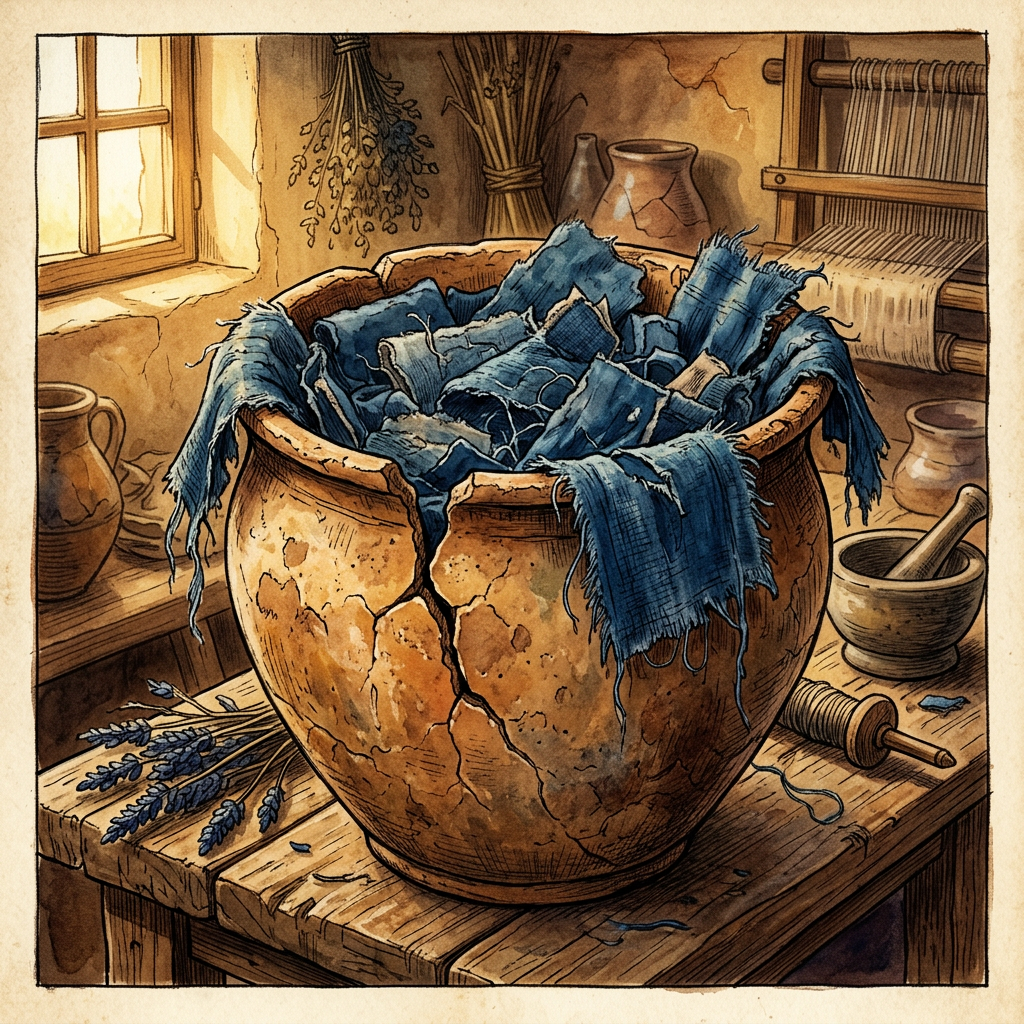
A breakthrough excavation at the Harappan site of Rakhigarhi has unearthed fragments of indigo-dyed cotton preserved in a sealed terracotta jar. Researchers believe these textiles were not everyday garments but rather ceremonial banners or wraps used during a hitherto unknown 'Blue-Dye' spring festival. The intensity of the pigment suggests a sophisticated knowledge of fermentation and oxidation processes used specifically for ritual aesthetics.
The jar was discovered in a centralized plaza, surrounded by smaller hearths containing charred seeds of flowering plants. Archaeologists hypothesize that the Indus Valley inhabitants participated in communal rites where the color blue symbolized the return of water and the rebirth of the landscape. This finding adds a vibrant new dimension to our understanding of the sensory and color-coded nature of ancient South Asian cultural heritage.