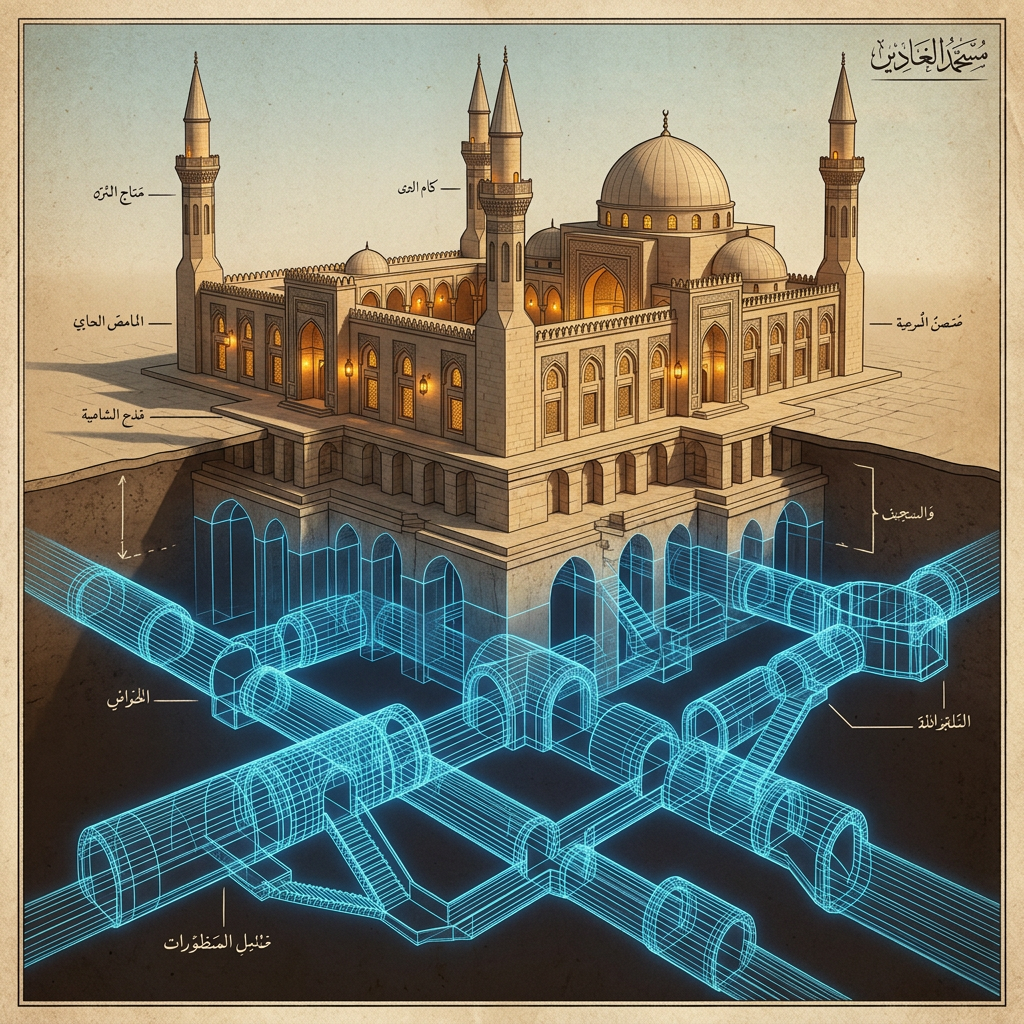
A joint international team has utilized a new non-invasive technology called 'Muon-Sieving' Lidar to map the subterranean structures of the Great Mosque of Kairouan in Tunisia. The scan has revealed a network of previously undocumented chambers and tunnels dating back to the Aghlabid dynasty of the 9th century.
These voids are believed to be part of a sophisticated subterranean ventilation and water-storage system designed to keep the mosque cool in the extreme desert heat. The discovery provides crucial data for architectural historians looking to document early Islamic civil engineering without disturbing the foundations of the fragile historic site.