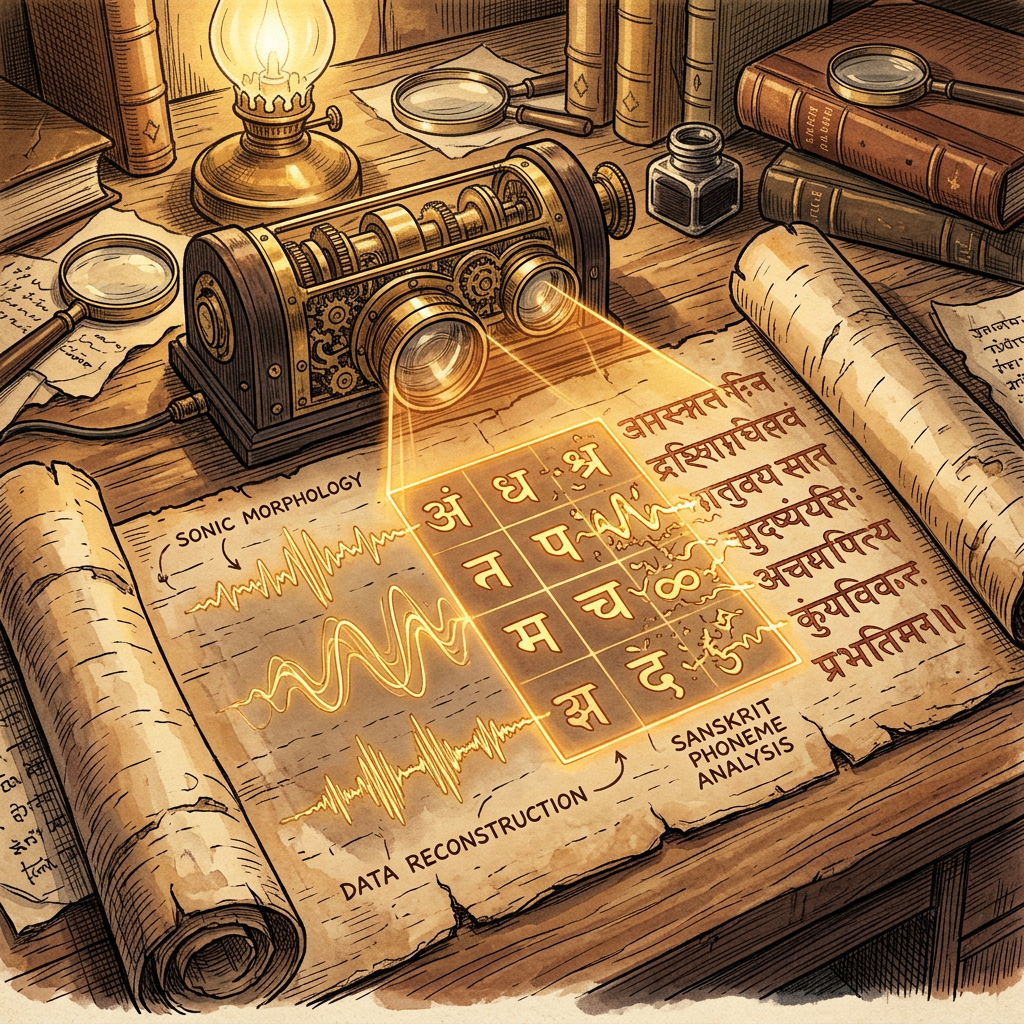
Researchers at the Institute for Digital Humanities have successfully used advanced AI algorithms to decipher a collection of 8th-century Siddham script fragments discovered in the Pamir Mountains. The decoded texts reveal previously lost Sanskrit treatises focused on theoretical acoustics, detailing the physics of sound reflection and the mathematical ratios of harmonic intervals used in monastic architecture.
The manuscripts describe the systematic use of "acoustic cavities" in stone structures to amplify specific frequencies, suggesting that ancient Indian engineers possessed a deep understanding of sound wave propagation. This breakthrough not only adds to the corpus of Sanskrit scientific literature but also provides a technical blueprint for how sacred spaces were engineered to create immersive auditory environments.