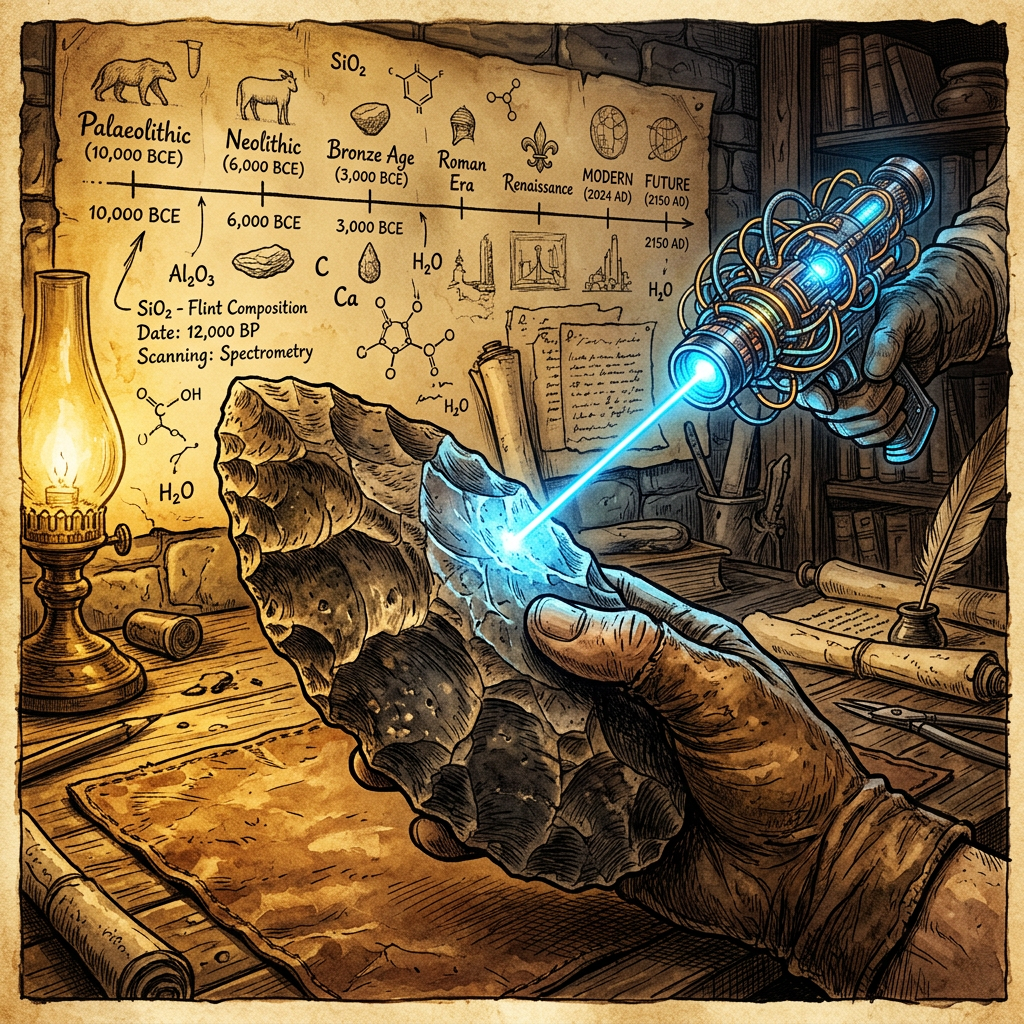
A team of geochronologists has utilized an innovative Cosmogenic Beryllium-10 surface exposure dating methodology to analyze stone tools found in the Godavari Basin. The study, published in the Journal of Archaeological Science, pushes the timeline of human occupation in this region back to approximately 120,000 years ago, aligning with a major period of climatic transition during the Middle Pleistocene.
By measuring the accumulation of isotopes in the quartz within the artifacts, the researchers were able to bypass the limitations of traditional radiocarbon dating, which cannot reach this temporal depth. The results suggest a sustained human presence in the Godavari region much earlier than previously confirmed, providing critical data for understanding the dispersal of early hominins across the Indian peninsula.