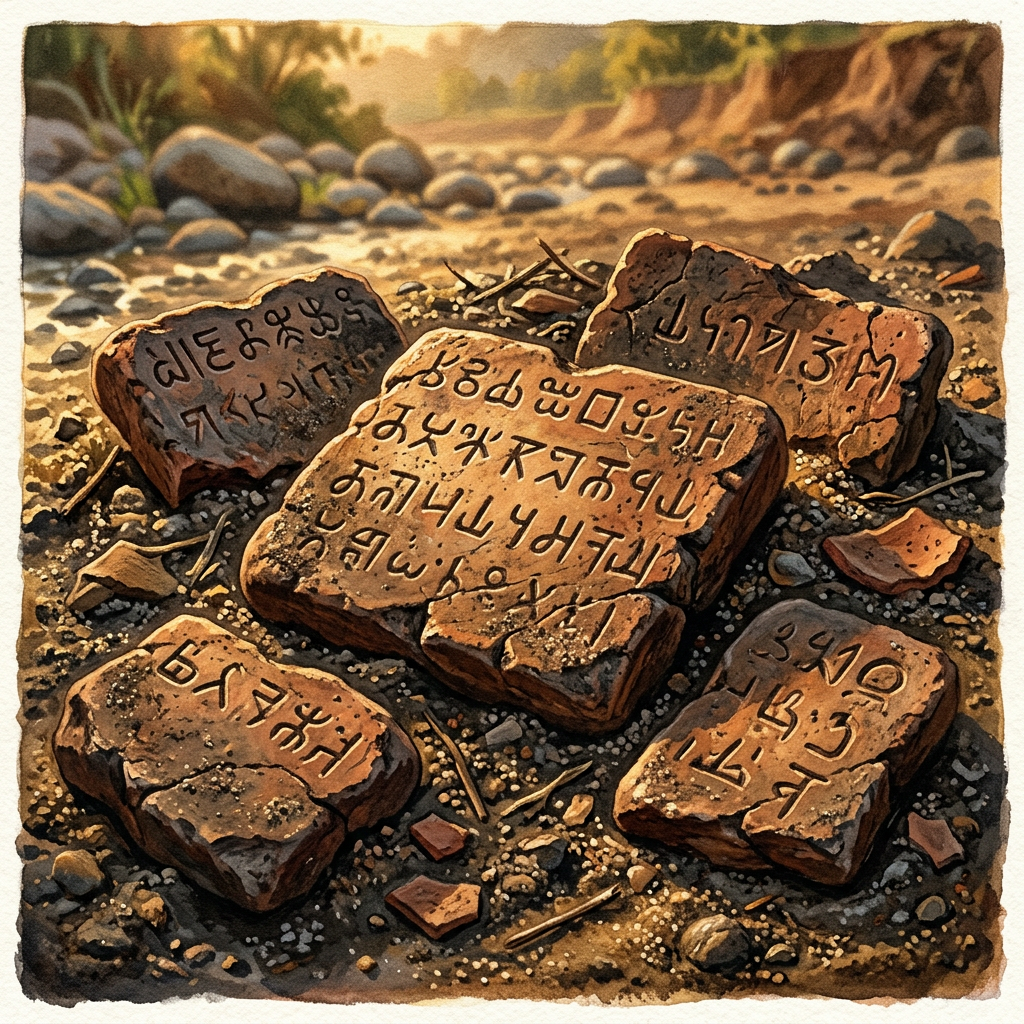
Archaeologists working in the Ghaggar-Hakra river basin have unearthed a cache of terracotta tablets dating back to the 6th century BCE. These artifacts, inscribed with a variant of early Brahmi script, contain a philosophical treatise titled 'Mana-Suddhi', which details the ancient Vedic approach to the purification of consciousness as a prerequisite for social harmony.
Scholars at the National Institute of Archaeology suggest that these texts represent one of the earliest systematic attempts to categorize mental states into shuddha (pure) and ashuddha (impure), providing a missing link between late Rigvedic thought and the formalized ethics of the early Upanishadic period. The discovery emphasizes that the internal 'ecology of the mind' was considered as vital as physical laws in maintaining the Rta (Cosmic Order).