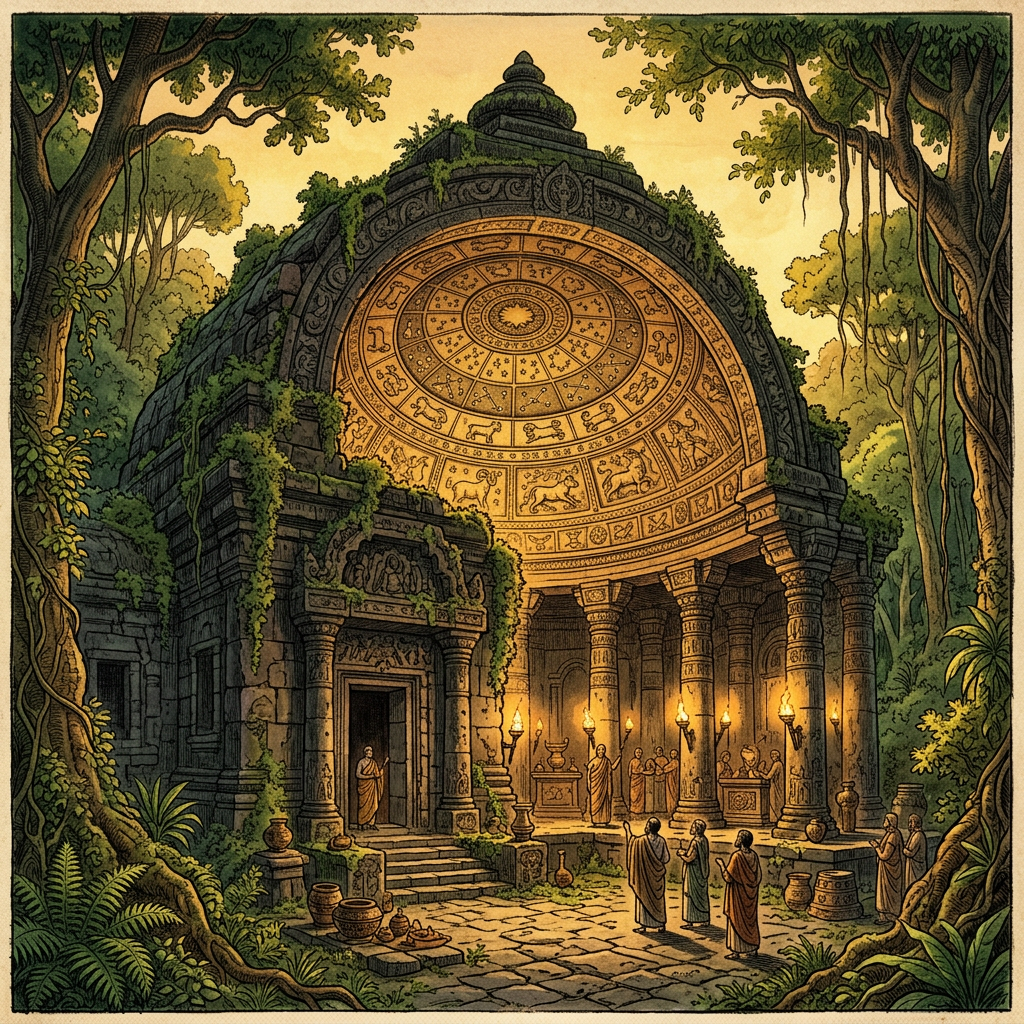
Archaeologists have unearthed a remarkably well-preserved 10th-century temple belonging to the Later-Seuna (Yadava) dynasty in a remote forest patch in the Latur district of Maharashtra. The structure, largely hidden by dense vegetation and debris for centuries, is unique for its elaborate mandapa ceiling, which features a rare intact Rashichakra (zodiacal wheel) carved in high-relief basalt.
The excavation team from the State Archaeology Department noted that the temple's architectural style serves as a transitional link between the earlier Rashtrakuta rock-cut traditions and later Hemadpanti structural designs. Preliminary analysis of the site has also revealed a series of hero-stones (virgal) and a damaged but identifiable statue of a seated Vishnu in his Varaha avatar, suggesting the site was a major religious center for the region's medieval agrarian communities.