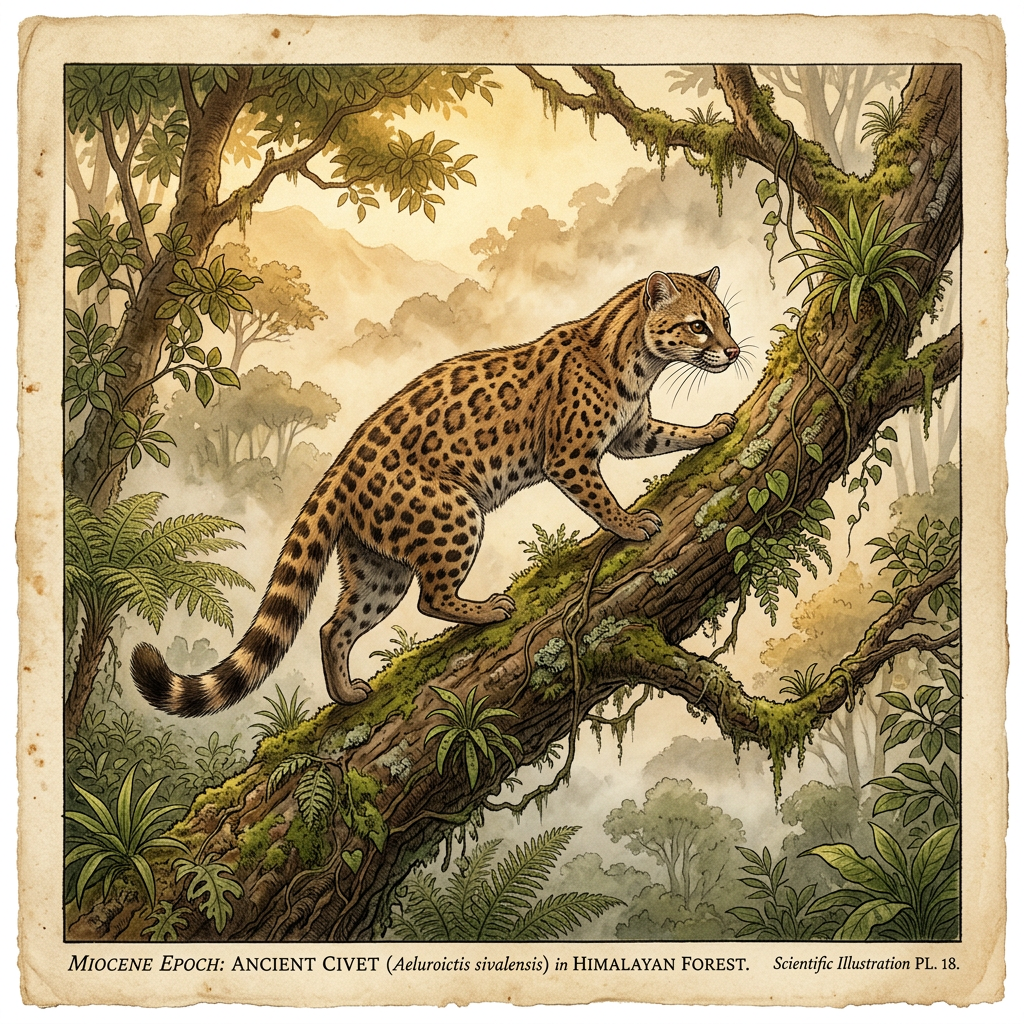
Paleontologists from the Wadia Institute of Himalayan Geology have identified a new species of giant arboreal carnivore from fossilized remains discovered in the Ramnagar formation. Dating back to the Miocene epoch, the species—tentatively named Viverra gigantus—resembles a modern civet but grew to the size of a small leopard, featuring specialized ankle joints for vertical climbing.
The find includes a nearly complete lower mandible and several vertebrae, which indicate a highly specialized diet of both small mammals and highland fruits. This discovery provides crucial data on the evolution of arboreal predators in the Indian subcontinent during a period of significant tectonic uplift and climate change.
According to lead researcher Dr. Anita Sharma, the morphological traits of this species suggest it occupied a unique ecological niche that has since vanished. The site has also yielded fossilized seeds of ancient evergreen trees, helping scientists reconstruct the lush, high-canopy forests that once dominated the Himalayan foothills.