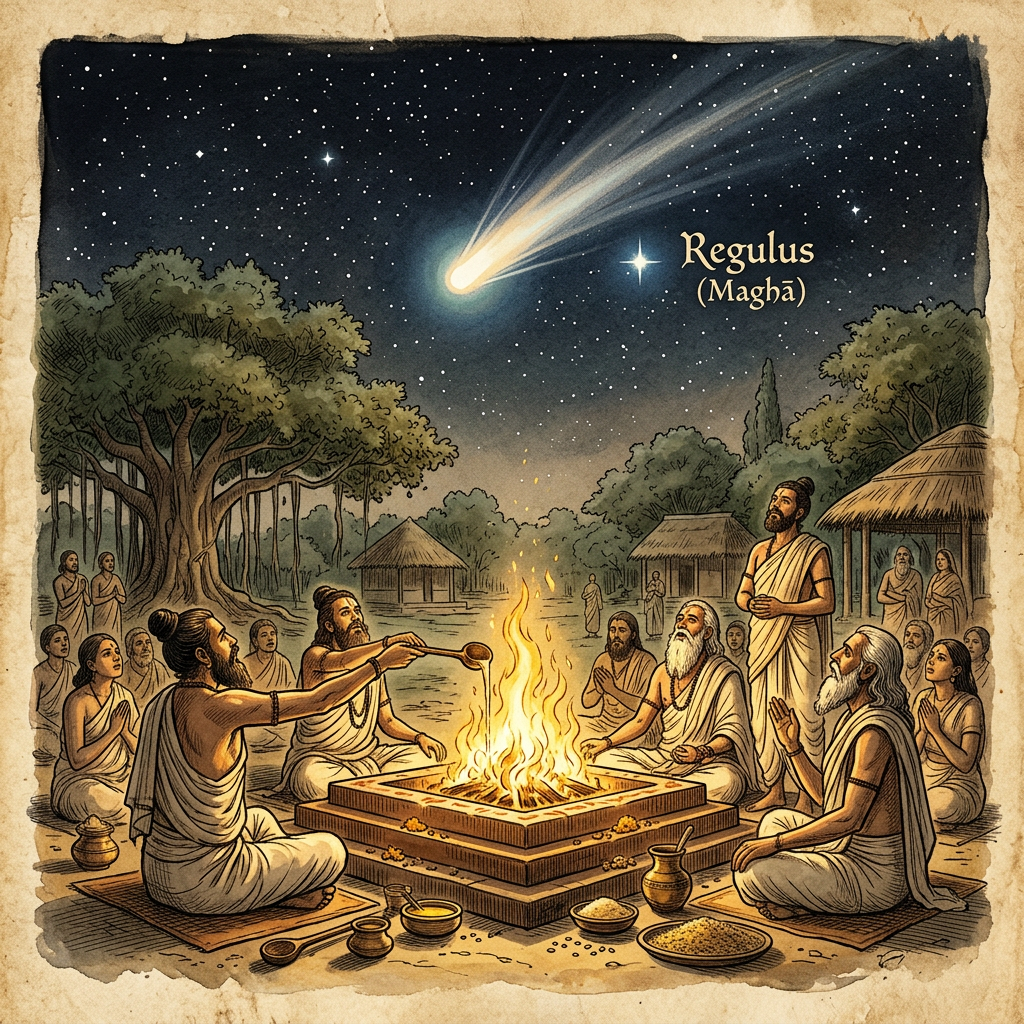
A computational study published in the Journal of Archaeoastronomy has identified a precise correlation between specific ritual descriptions in the Atharvaveda and an astronomical event in the 10th century BCE. By modeling high-latitude celestial trajectories, researchers matched descriptions of a 'celestial fire-serpent' to a rare cometary flare that would have been visible in the constellation of Magha circa 950 BCE.
The research suggests that the placement of specific sacrificial altars was timed to coincide with this rare luminosity. This discovery provides a fixed chronological anchor for the later Vedic period and demonstrates a level of observational precision in ancient Indian astronomy that predates formal mathematical treatises by several centuries.