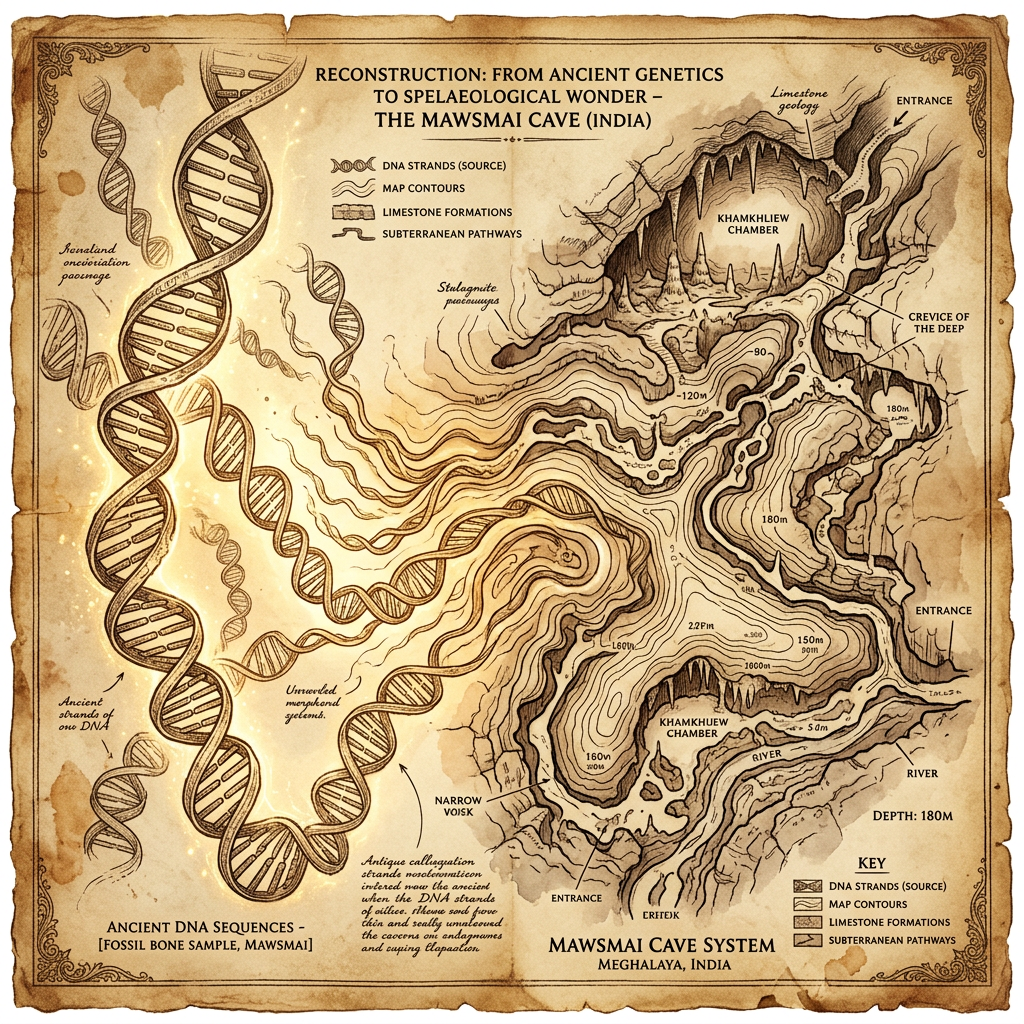
A new paleogenetic study of remains from the Kurnool Basin in southern India has identified the earliest known genetic adaptation to extreme diurnal humidity shifts. The 9,500-year-old genome reveals specific selection in skin-barrier proteins and respiratory cilia, which researchers believe were essential for long-term habitation in the deep limestone cave systems of the region.
This unique ghost lineage of hunter-gatherers shows high genetic continuity with later Neolithic populations but carries ancestral markers that helped them survive the volatile climatic shifts of the early Holocene. The findings provide critical insights into the localized evolutionary pressures that shaped the prehistoric inhabitants of the Indian peninsula.