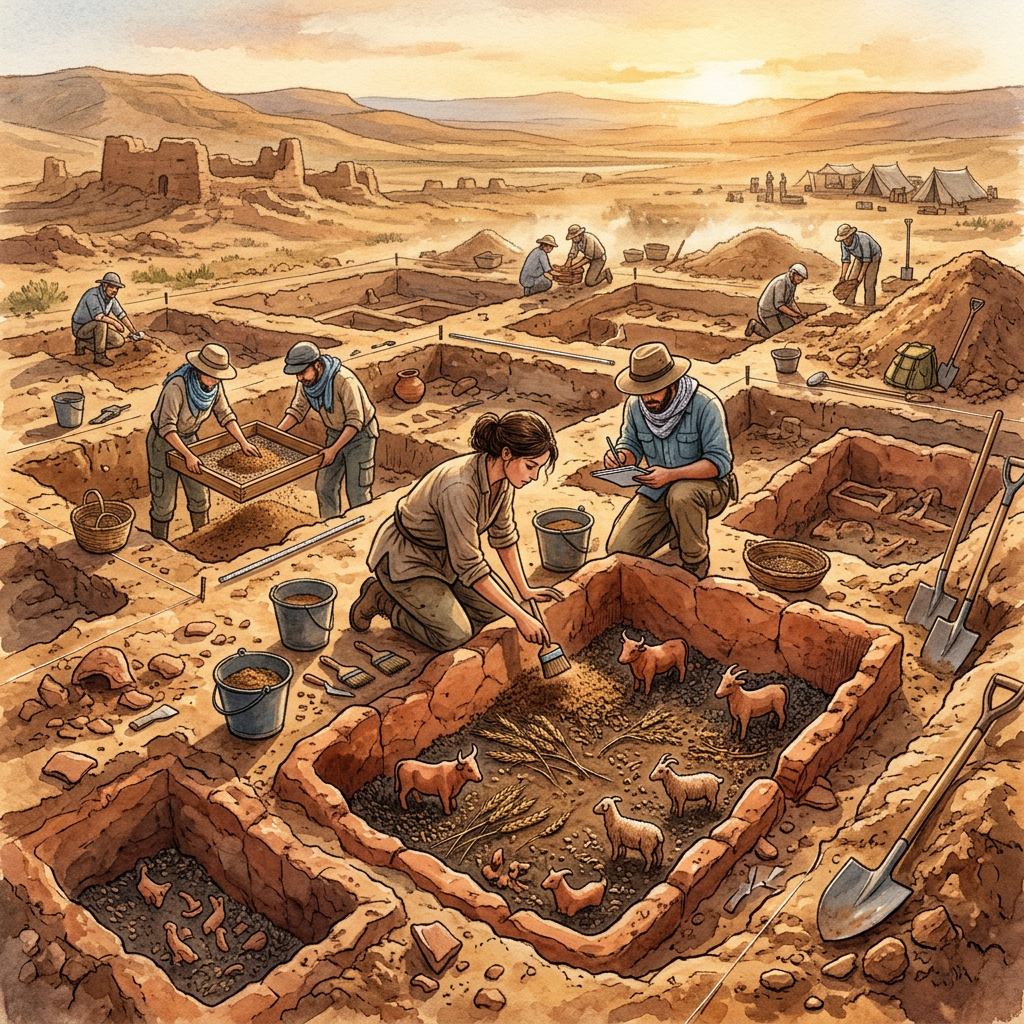
Recent excavations in the Lake Chad Basin have revealed a series of elaborate terracotta-lined offering pits attributed to the ancient Sao civilization. These pits, dating back to approximately 2,000 years ago, contain a wealth of ceremonial evidence, including charred millet seeds, charred fish remains, and remarkably preserved clay figurines of water spirits and zoomorphic deities.
Archaeologists believe these sites served as the primary locations for seasonal harvest festivals designed to appease river spirits and ensure the annual flooding of the basin. The discovery of specific "festival pottery"—vessels larger and more ornate than domestic ware—suggests that these gatherings involved large-scale communal feasting and ritualized offerings that laid the groundwork for regional cultural traditions still observed today.