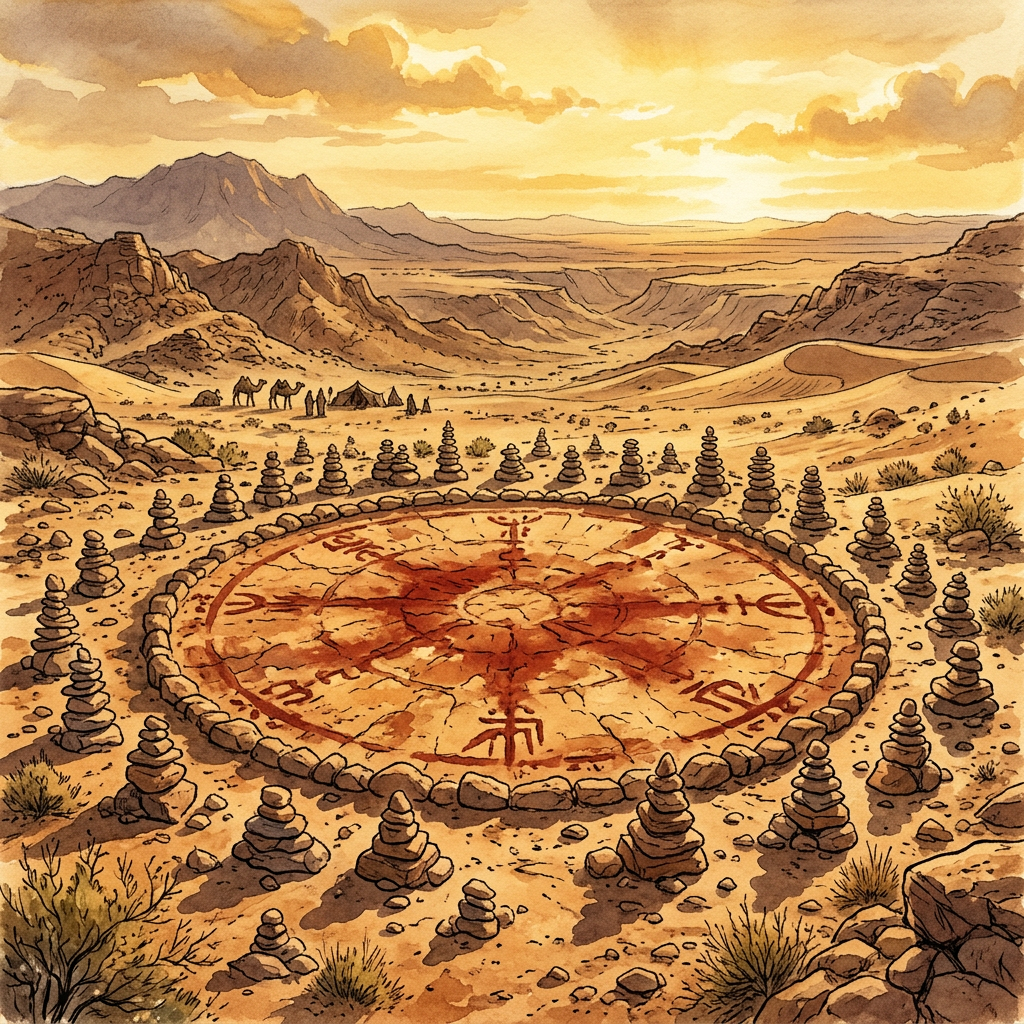
Archaeologists exploring the coastal regions of Namibia have identified what they describe as a massive red-ochre stained dancing floor. Surrounded by a circle of standing stones, the site shows evidence of 5,000 years of continuous use. Analysis of the soil reveals layers of crushed pigments and the remains of ostrich eggshell beads, which were likely shed during energetic ritual dances.
The orientation of the site suggests it was used for rain-greeting ceremonies held during the transitional season between the dry and wet months. Researchers argue that the permanence of this site indicates that ancient nomadic groups returned to this specific coastal threshold for millennia to conduct complex social and religious festivals that reinforced tribal identity and survival strategies in the arid landscape.