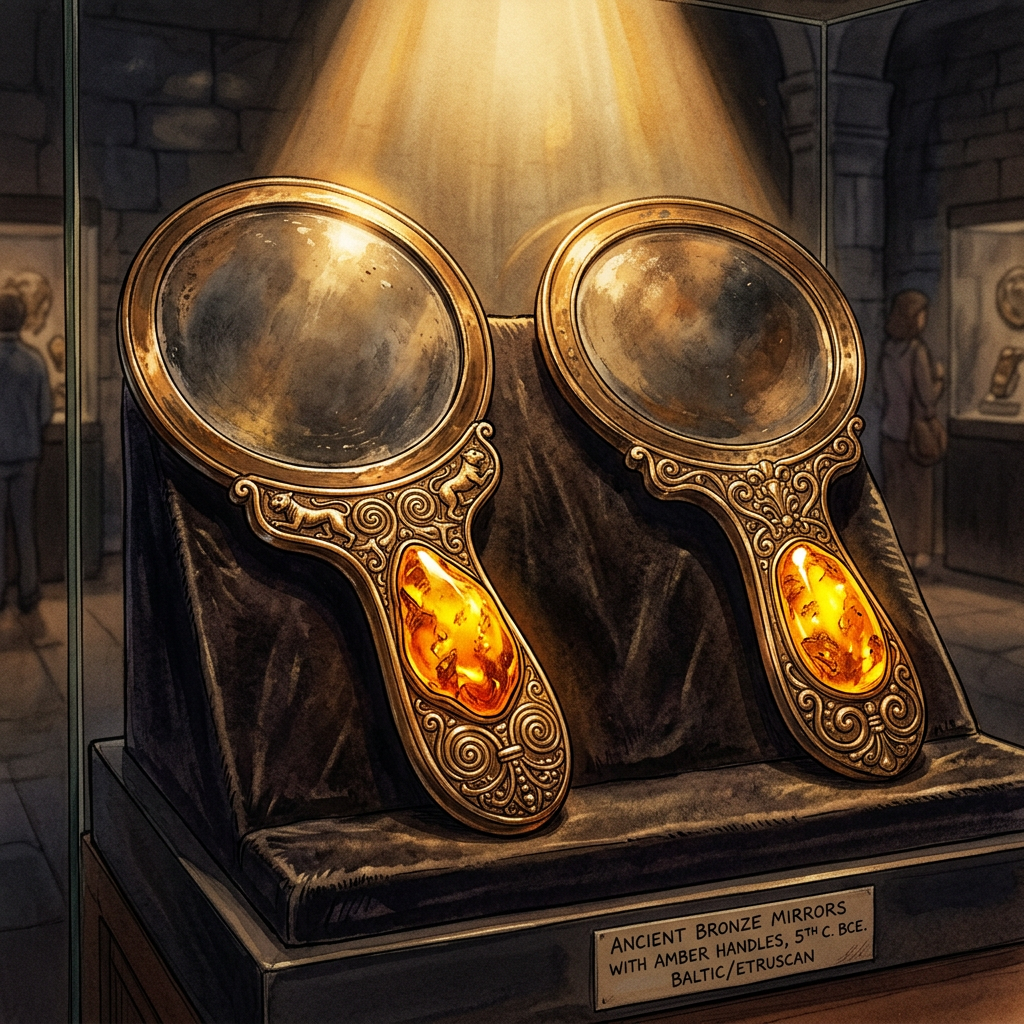
A remarkable discovery in the coastal dunes of the Baltic region has brought to light a set of bronze mirrors inlaid with raw amber. Dating back 3,000 years, these artifacts were found in a ritual context that suggests they were used during prehistoric Midsummer festivals. The mirrors were intentionally buried facing the sea, likely to reflect the light of the sun at its highest point in the sky.
Researchers believe that these 'solar-reflectors' played a central role in festivals that honored the transition of the seasons and the power of the sun. The use of amber—the region's most precious resource—indicates that these festivals were the most significant events in the social calendar, serving to bless the seafaring routes and the upcoming summer harvest.