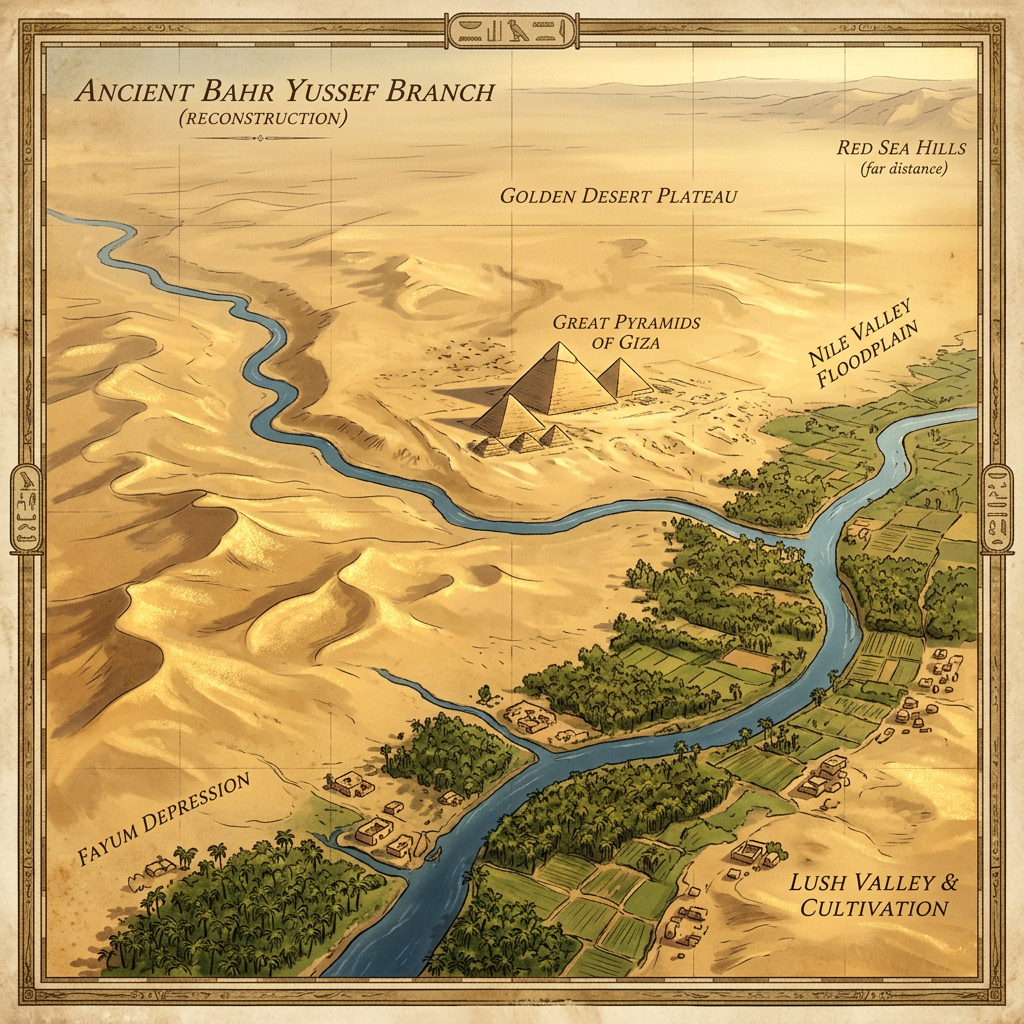
International researchers using satellite radar imagery have discovered a major buried branch of the Nile River, dubbed the 'Ahramat' (Pyramid) branch. This 64-kilometer-long waterway once flowed directly past 31 ancient Egyptian pyramid complexes, including the famous Giza plateau, Saqqara, and Dahshur. The discovery explains why these massive structures were built in a now-arid strip of the Western Desert, far from the modern Nile.
The study, published in Communications Earth & Environment, reveals that the branch likely played a crucial role in the transport of massive stone blocks and laborers required for pyramid construction. Scientists believe the river dried up or was buried by sand following a severe drought nearly 4,200 years ago, leading to the eventual abandonment of these river-side construction sites.