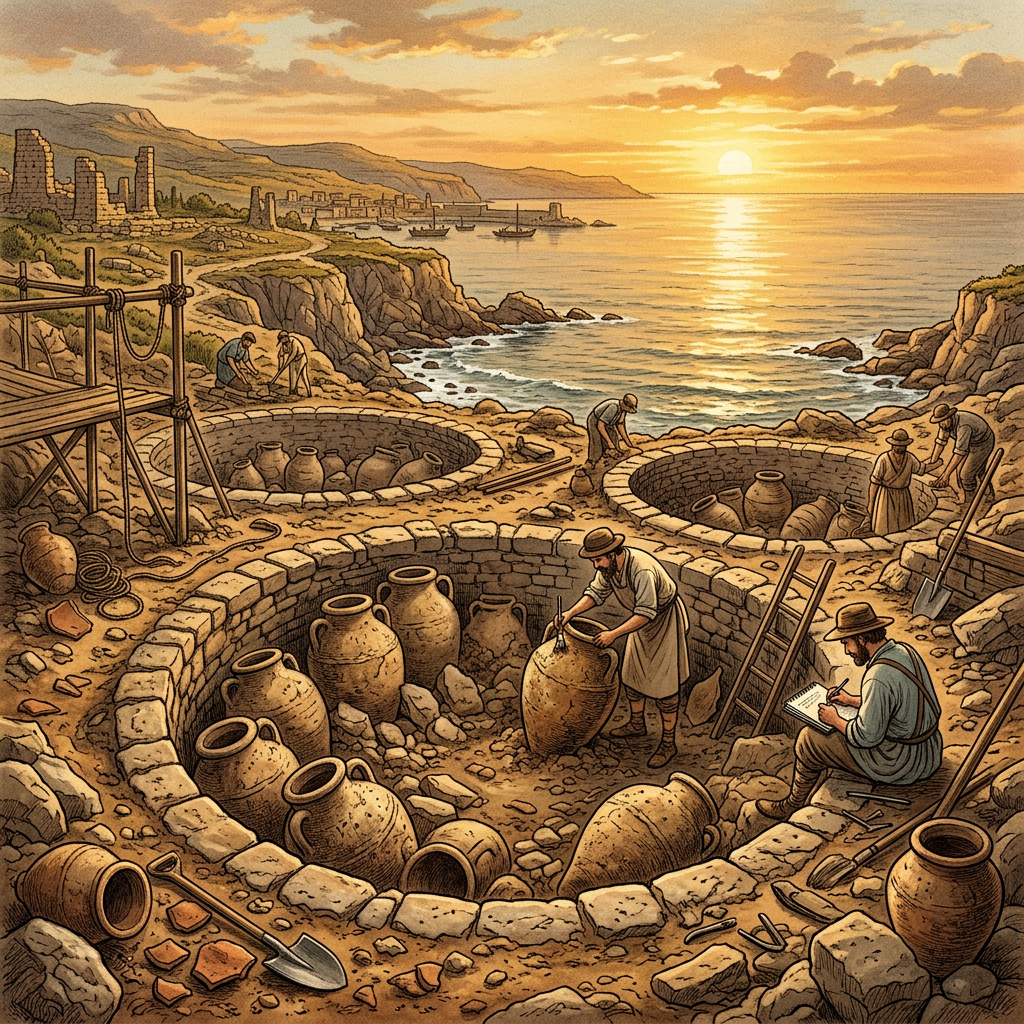
New excavations at a coastal outpost of the Indus Valley Civilization in Sindh have brought to light a large-scale industrial facility for the production of fish oil. The site features a series of interconnected terracotta vats and stone pressing floors, accompanied by thousands of fish bones and charred residues of marine fats.
Archaeologists suggest that the fish oil produced here was a major export commodity, likely used for lighting, medicine, and as a sealant for the hulls of maritime trade vessels. The presence of standardized Harappan weights and seals at the facility indicates that the operation was part of a state-regulated economy that connected the coastal resources of the Arabian Sea to the urban centers of the interior.