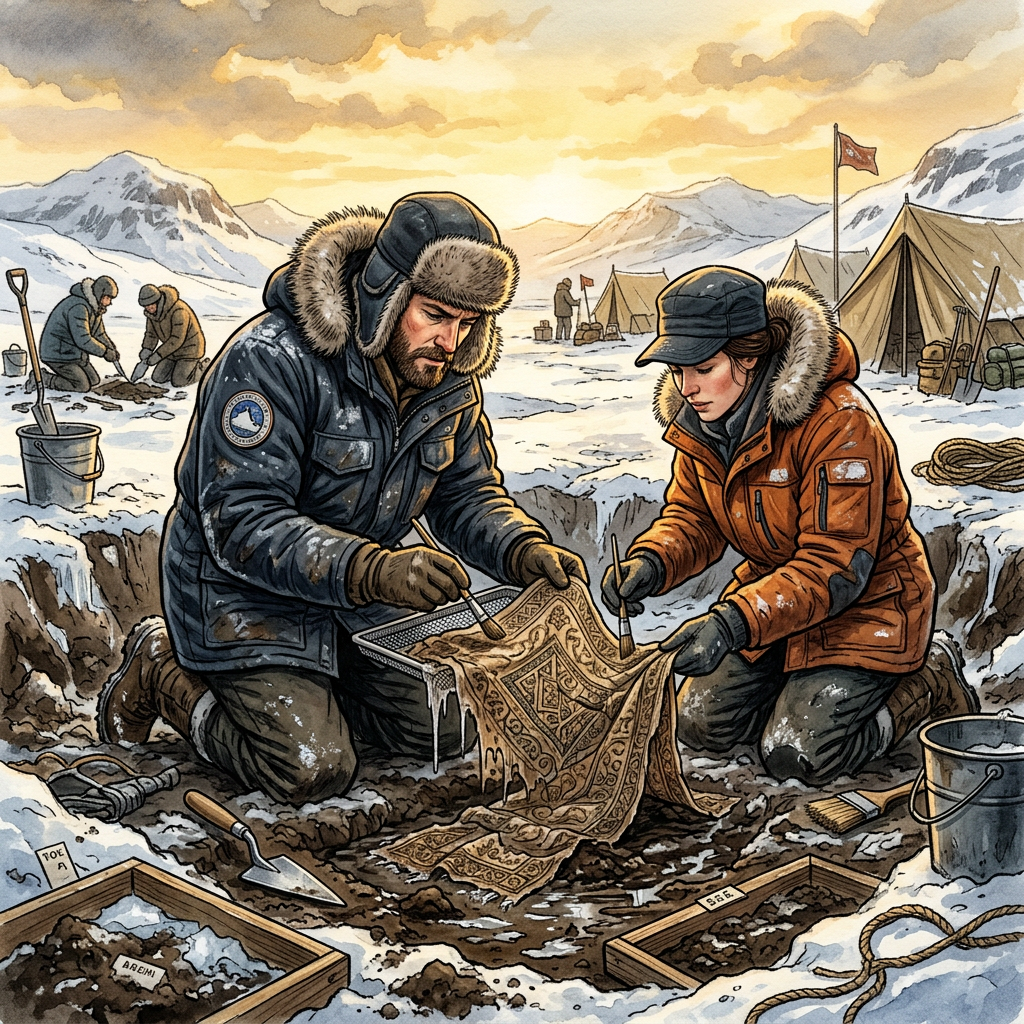
The rapid thawing of permafrost in the Sayan Mountains of Southern Siberia has exposed an exceptionally well-preserved Xiongnu burial site dating back to the 1st century BCE. Archaeologists rushing to the site discovered that the freezing conditions had preserved organic materials that typically decay, including intricate silk bedding, lacquered wooden bowls, and leather horse harnesses with intact stitching.
The discovery provides unprecedented insights into the elite funerary customs of the Xiongnu nomadic confederation. Analysis of the silk patterns indicates strong trade ties with the Han Dynasty, while the presence of local wool textiles showcases the fusion of nomadic and sedentary craft traditions. Experts warn that while the thaw has provided this discovery, many other sites are at risk of rapid degradation as the protective ice disappears, necessitating urgent 'salvage archaeology' efforts across the Eurasian steppe.