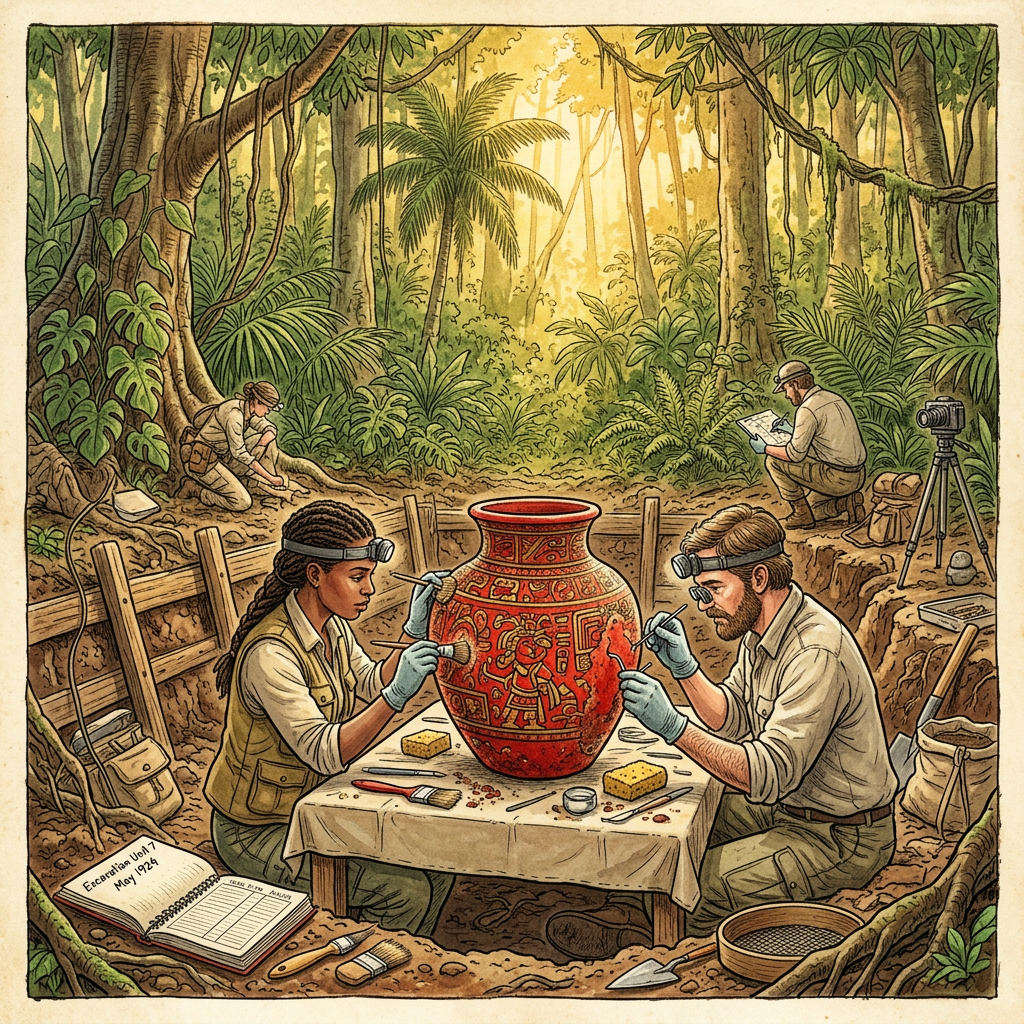
New geochemical analysis of pigments found in pre-Columbian sites has identified the 'Hematite and Cinnabar' Route, a major luxury trade network that linked the Brazilian Highlands to the central Andean civilizations. Researchers used lead isotope finger-printing to trace red mineral pigments back to specific mines in the Amazonian fringes, revealing that these materials were transported over 2,000 kilometers through complex riverine and forest corridors.
This discovery challenges the traditional view of the Amazon as an isolated region, suggesting instead that it was an active participant in the pan-American prestige economy. The trade in these minerals was likely associated with high-status funerary rituals and the production of sacred murals. The findings provide new evidence for the sophistication of long-distance logistical planning and diplomatic exchange between forest dwellers and mountain empires during the first millennium BCE.