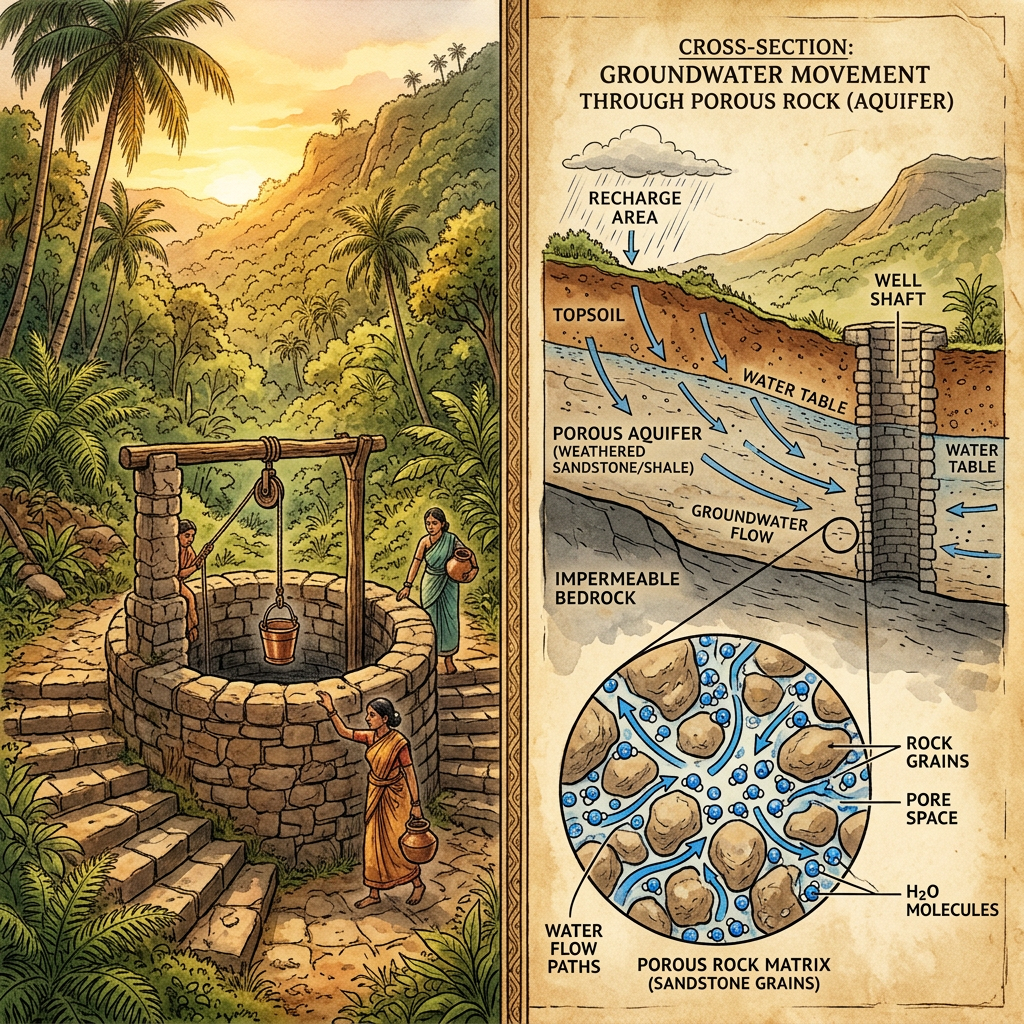
A team of computational linguists has successfully used neural networks to decipher previously unreadable 7th-century Nandinagari script fragments recovered from a temple archive in the Western Ghats. The texts, analyzed in a paper for Digital Humanities Quarterly, contain lost scientific observations regarding capillary action and hydrostatic tension within porous basaltic rocks, specifically applied to the construction of ancient deep-well systems.
The treatises, attributed to a forgotten school of Vastu (engineering), detail how different stone porosities affect the vertical migration of groundwater. By modeling the surface tension of water against various mineral surfaces, the ancient authors provided guidelines for optimizing the recharge rates of subterranean reservoirs. This finding highlights a sophisticated empirical understanding of porous media physics centuries before the formalization of Darcy's Law in the West.