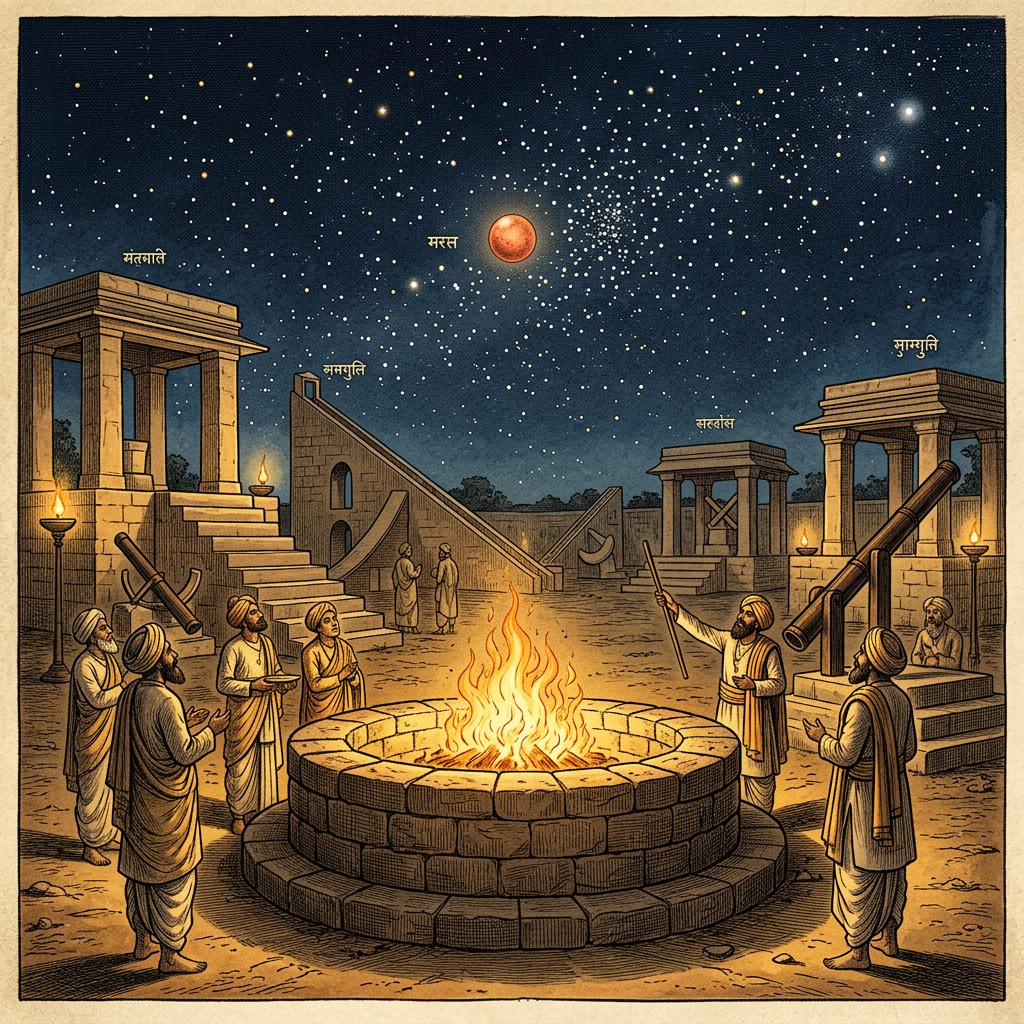
A multi-disciplinary study published in Astronomy & Astrophysics has established a definitive link between ritual tables described in the Shankhayana Brahmana and a rare celestial event: the transit of Mars across the Beehive Cluster (Praesepe) in 1750 BCE. By using high-precision backward orbital simulations, researchers confirmed that the specific durations of fire rituals mentioned in the text align perfectly with the observational window of this event from the North Indian plains.
The study argues that the Vedic ritual calendar was not merely symbolic but served as a sophisticated astronomical logbook. The mathematical precision required to time these rituals suggests that ancient observers had developed a high-resolution coordinate system for tracking planetary motion against fixed stellar backdrops. This finding reinforces the theory that Vedic astronomy was an empirical science rooted in systematic long-term observation.