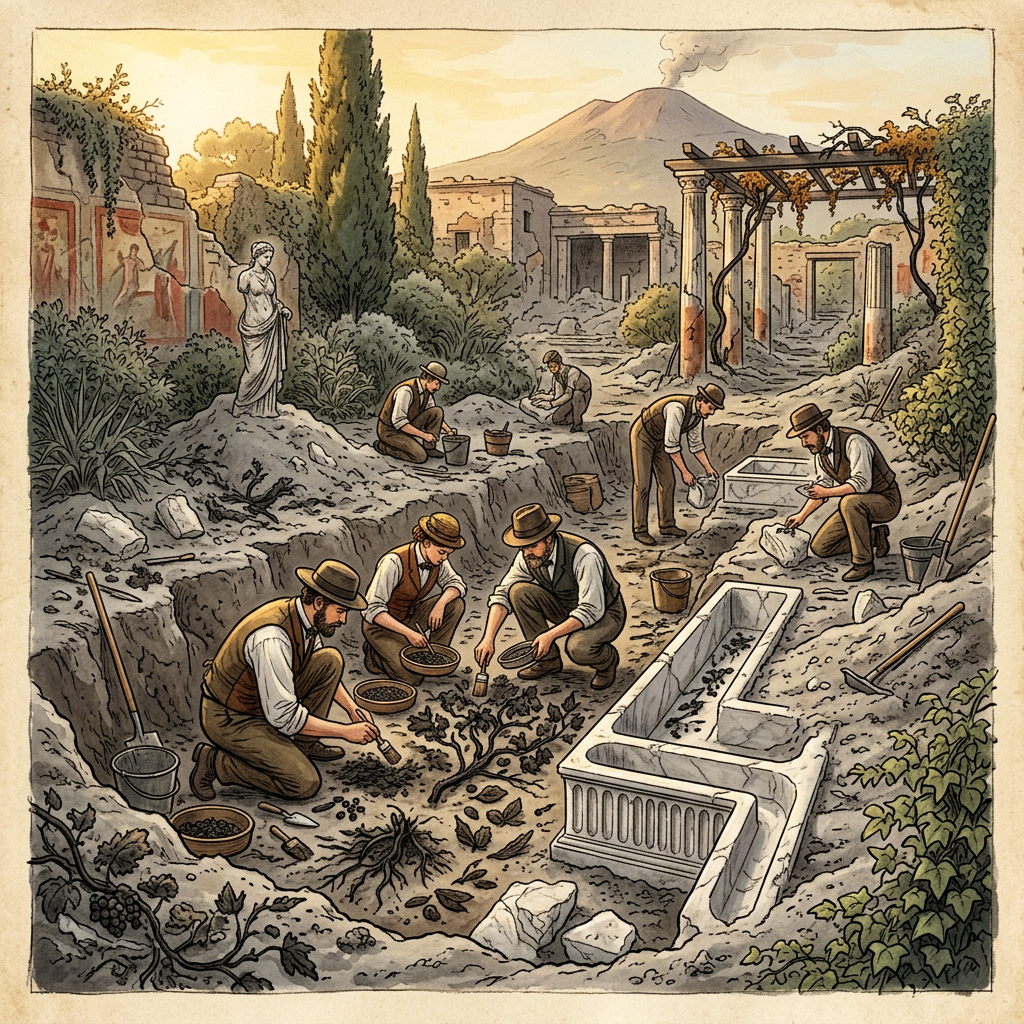
During routine stabilization work at the Villa San Marco in ancient Stabiae, archaeologists discovered a spice merchant's private garden perfectly preserved under layers of pumice from the 79 CE eruption of Mount Vesuvius. Using advanced 3D resin casting, researchers have successfully captured the root systems and carbonized remains of rare imports including black pepper, cardamom, and frankincense-producing trees, marking the first time such an extensive collection of exotic botanical specimens has been found in an archaeological context.
The garden featured a sophisticated irrigation network of lead pipes and decorative marble troughs designed to maintain the humidity required for these non-native species. Inscriptions found on the garden walls detail the merchant's trade connections with the Red Sea ports, offering a rare glimpse into the logistical efforts required to acclimatize Eastern spices for the Roman elite's personal consumption. This discovery confirms that high-status Romans were cultivating luxury spices domestically as status symbols.