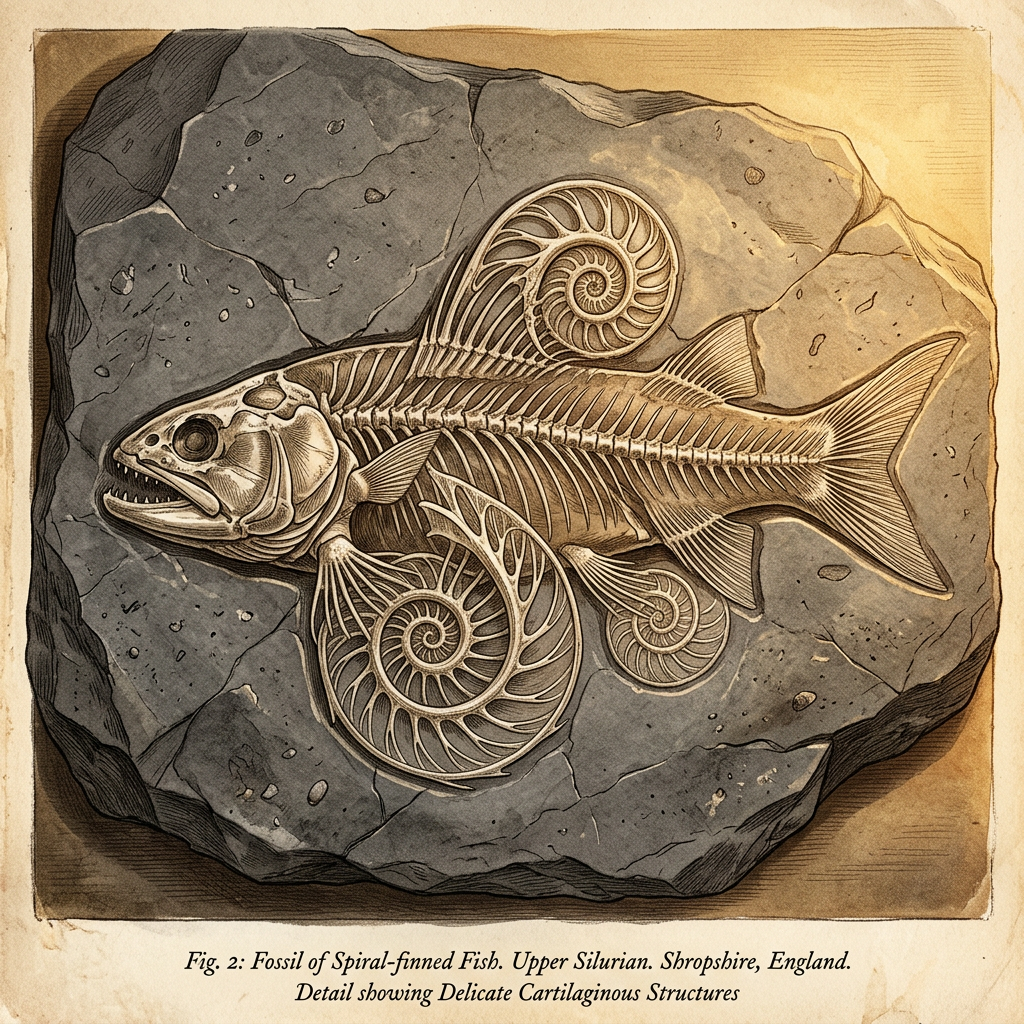
A new species of primitive ghost shark, named Chimaeravis spiralis, has been identified from fossil remains discovered in the Witteberg Group of South Africa. Dating back to the late Devonian period, approximately 385 million years ago, the fossil is exceptionally preserved in a fine-grained siltstone matrix. The most striking feature of the specimen is its unique spiral-shaped pectoral fins, a physiological trait never before seen in early chondrichthyans (cartilaginous fish).
The discovery suggests that early sharks and their relatives experimented with highly diverse locomotory styles before modern fin structures became standardized. Researchers believe the spiral fins allowed for enhanced maneuverability in the oxygen-poor, shallow lagoon environments where the species lived. This find provides a critical 'missing link' in the evolution of the holocephalan lineage, which includes modern-day ratfish and rabbitfish, revealing a complex evolutionary history that began far earlier than previously documented.