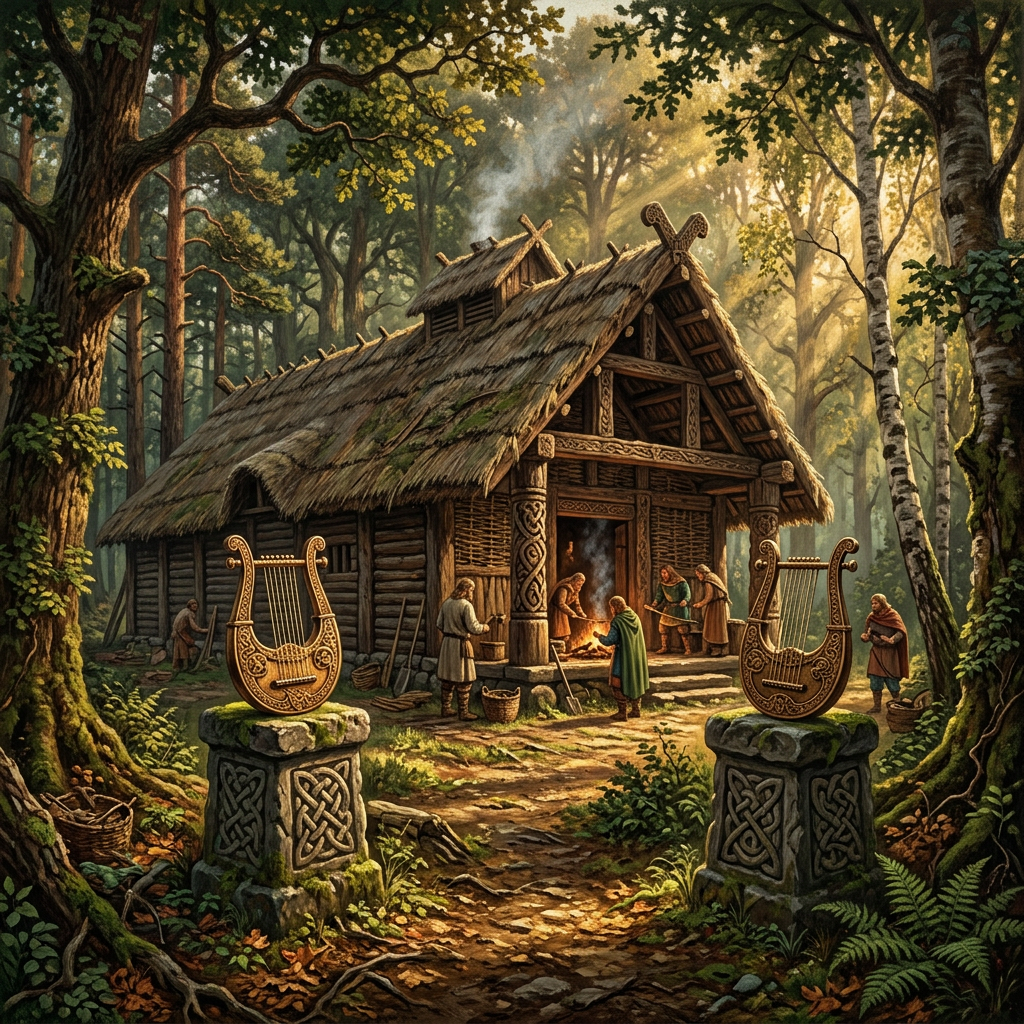
Archaeologists in the Black Forest have uncovered what appears to be a Celtic bardic conservatory dating to the mid-1st millennium BCE. The site consists of a large, timber-framed hall with a unique acoustic floor made of layered river stones and charcoal. Within the central chamber, researchers found the remains of several bronze lyre frames, alongside ivory tuning pegs and carved wooden flutes, indicating a specialized center for musical and oral tradition training.
The hall is surrounded by smaller dwellings that contained a high density of imported Mediterranean luxury goods, suggesting the bards held an elite social status. This discovery is significant as it provides the first physical evidence of formal institutionalized training for the Celtic 'bard' class, who were previously known only through later Roman accounts. The presence of musical instruments alongside ritualistic offerings suggests that the conservatory also functioned as a sacred space for the invocation of deities through sound.