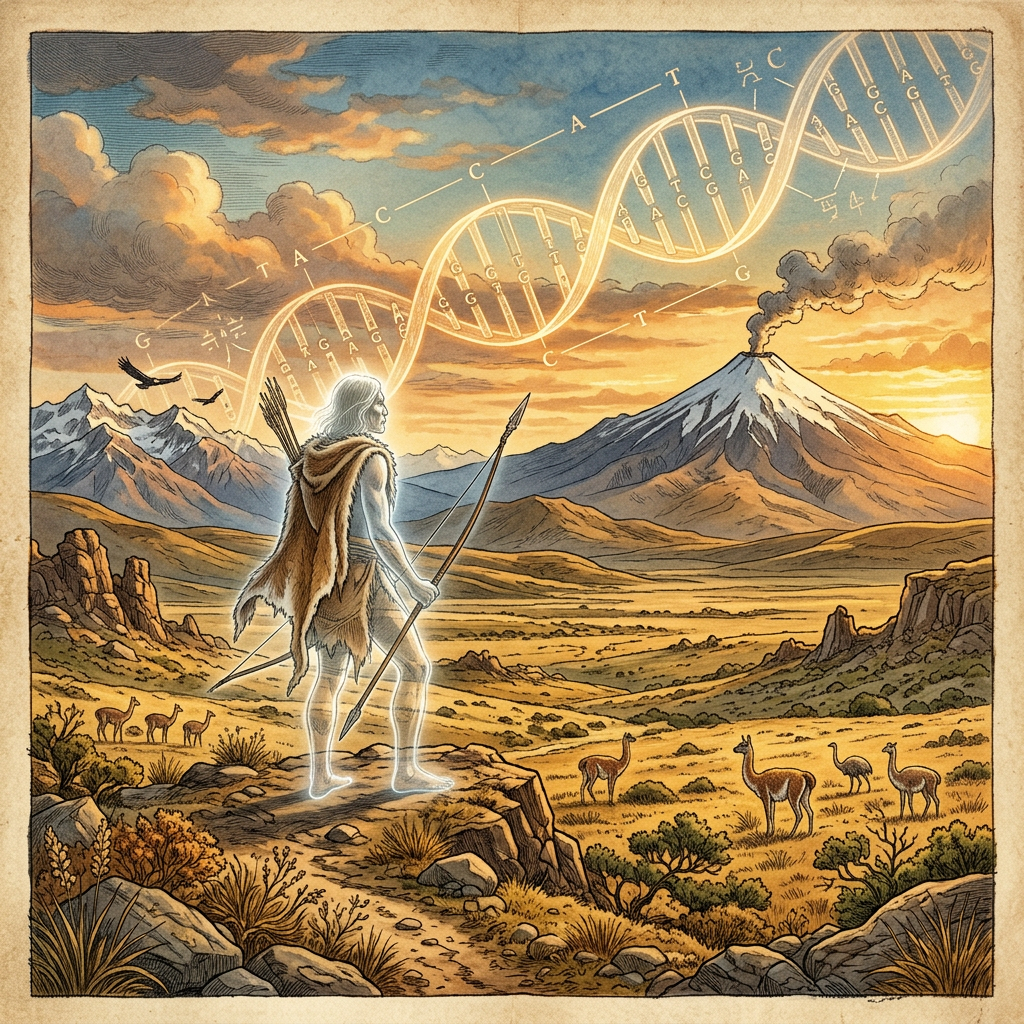
A massive genomic survey of late Pleistocene remains from the Pampas and Patagonia regions of South America has revealed the existence of a 'Ghost' Paleo-American lineage. This population, which existed approximately 14,000 years ago, appears to have carried a unique genetic adaptation that allowed them to survive in environments with high-selenium soil concentrations, which would typically be toxic to humans. This adaptation involved a rare duplication of the SELENBP1 gene, facilitating more efficient detoxification.
The study, published in Cell Reports, suggests that this group arrived in the southern cone of the Americas via a rapid inland migration route that was previously overlooked. Their genetic signature is distinct from the later waves of Beringian migrants, indicating that the initial peopling of the Americas was characterized by multiple, highly specialized groups who adapted rapidly to local geological anomalies. This discovery reshapes the map of early human dispersal in the Southern Hemisphere.