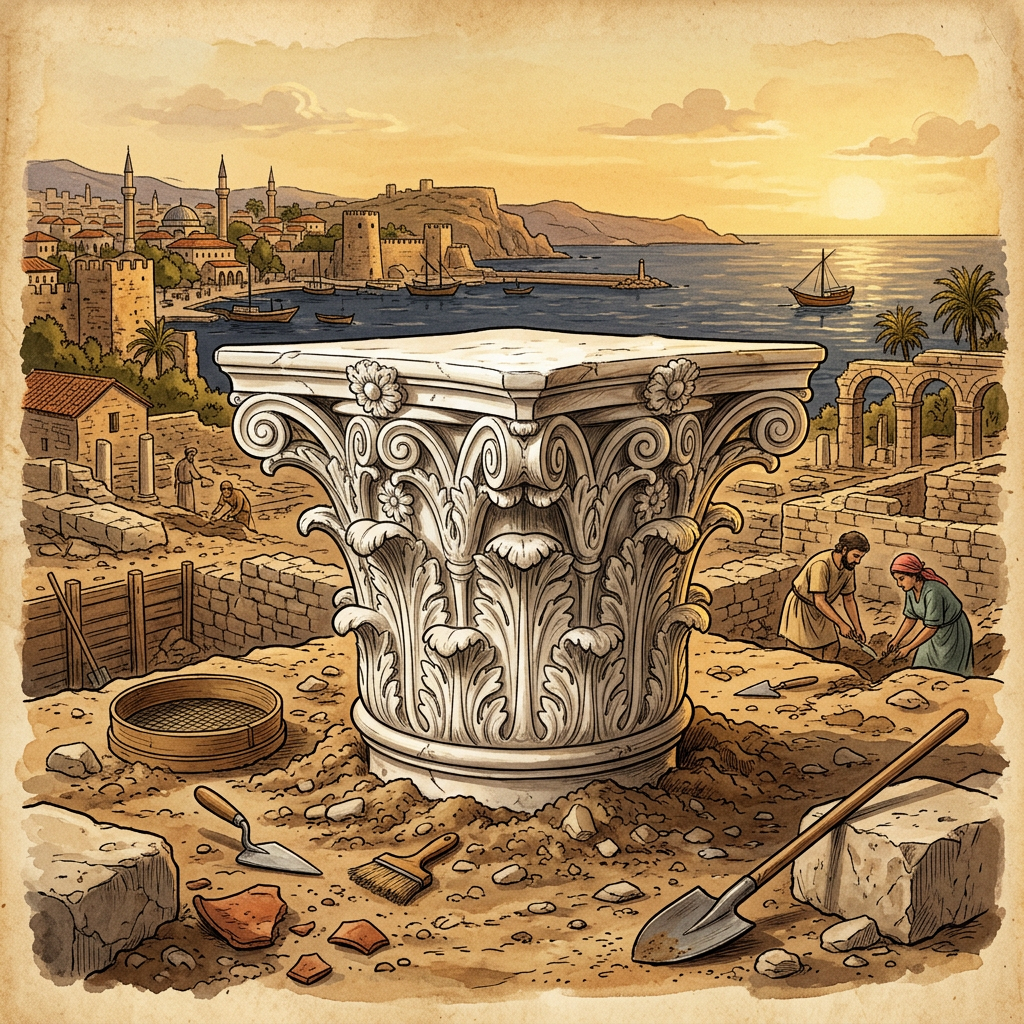
Excavations in the ancient city of Halicarnassus (modern-day Bodrum) have revealed the remains of a 2nd-century BCE temple dedicated to Apollo. The most striking find is a perfectly intact marble Ionic capital featuring delicate acanthus leaf motifs. The temple appears to have been built over an earlier archaic sanctuary, illustrating the long-standing sacred importance of the site to the coastal communities of Caria.
Archaeologists believe the temple was part of a larger sacred precinct that included a ritual spring and a treasury. The discovery of numerous terracotta votive figurines representing musicians and poets confirms Apollo’s role here as the patron of arts and prophecy, providing a window into the religious life of the late Hellenistic world.