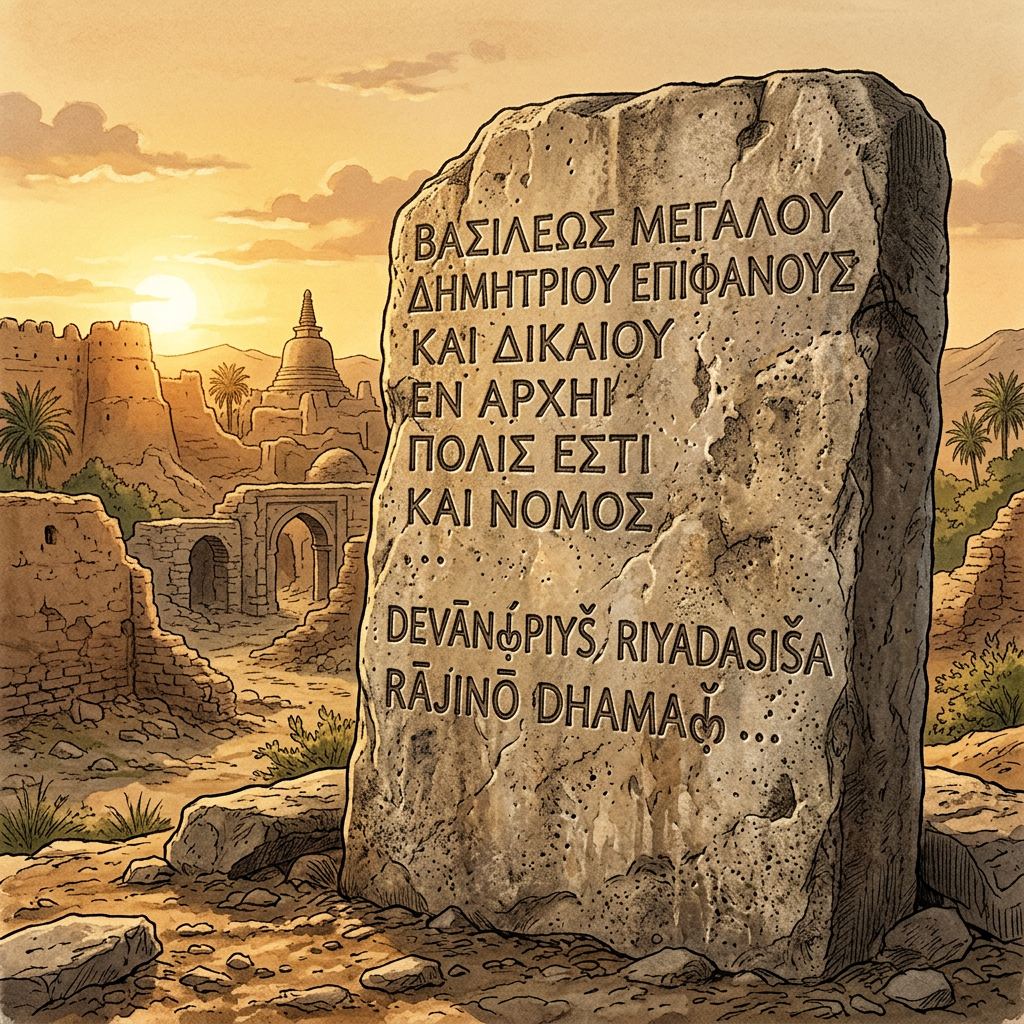
Archaeologists working in the ancient Greco-Bactrian city of Termez have unearthed a series of limestone stelae inscribed with a unique hybrid script. These inscriptions represent one of the earliest known attempts to synthesize Aristotelian syllogisms with the emerging Nyaya school of Indian logic. The text outlines a rigorous framework for inference, suggesting that philosophical exchange between the Hellenistic world and the Indian subcontinent was far more structured than previously understood.
Scholars believe the stelae were part of a public academy dedicated to the logic of perception. The discovery challenges the traditional timeline of Indian formal logic, providing evidence that the concept of the 'five-membered syllogism' may have been refined through direct dialogue with Greek peripatetic philosophers. This finding highlights a sophisticated cross-cultural intellectual movement that flourished along the early trade routes of Central Asia.