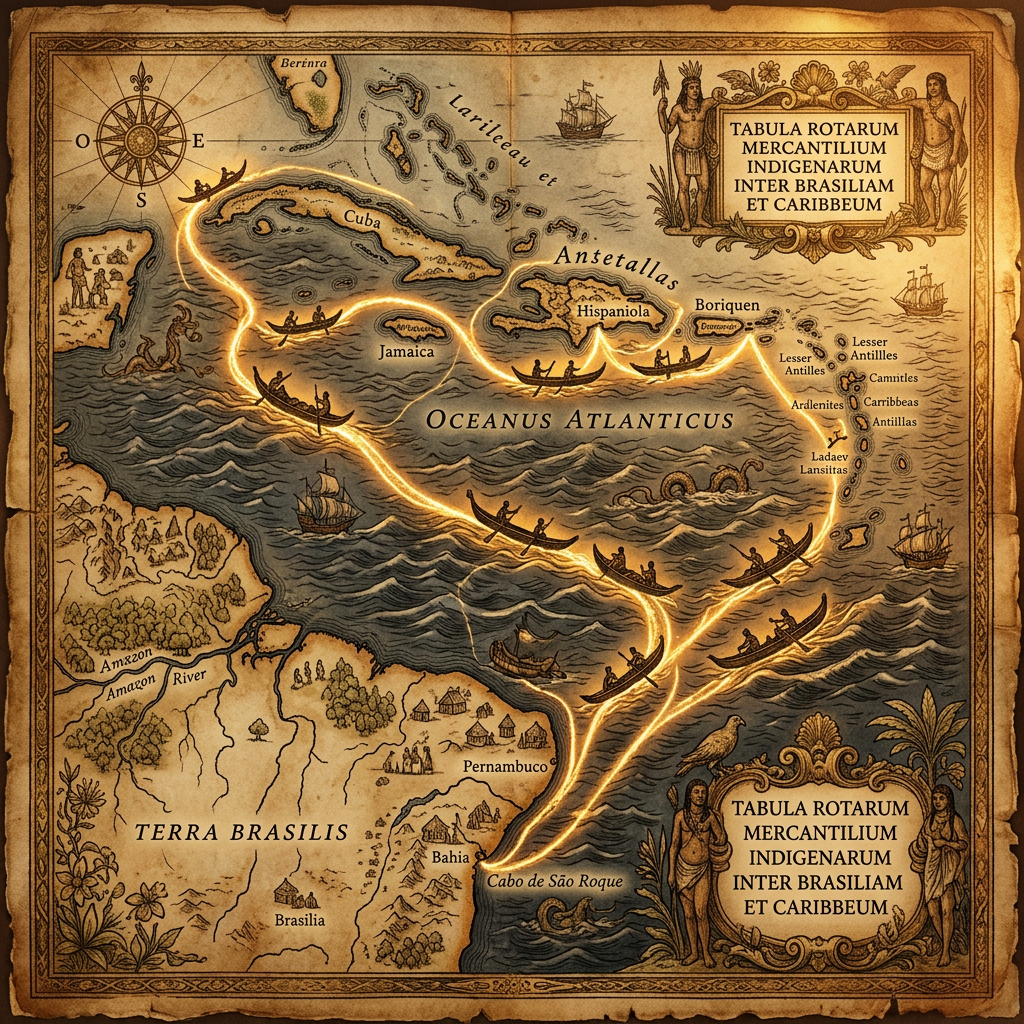
A breakthrough study published in the Journal of Maritime Archaeology has identified a previously unknown 4,000-Year-Old maritime trade corridor dubbed the 'Beryllonite and Tin' Seaway. Using trace element analysis on rare beryllonite gemstones found in the Lesser Antilles, researchers have traced their origin to the geological deposits of the Brazilian Highlands, suggesting an extensive prehistoric naval network.
The findings indicate that ancient mariners utilized stable coastal currents and seasonal winds to transport luxury minerals and tin-bronze precursors between South America and the Caribbean islands. This discovery challenges the long-held belief that these regions were largely isolated until the late Ceramic Age. The evidence suggests that high-capacity dugout canoes were capable of navigating open-sea legs of several hundred miles to facilitate this exchange.
Archaeologists also uncovered unique 'waypoint' settlements along the Guyanese coast that served as victualing stations for these traders. This research redraws the map of pre-Columbian connectivity and suggests that the exchange of technology and artistic styles was far more fluid across the Atlantic's western rim than previously understood.