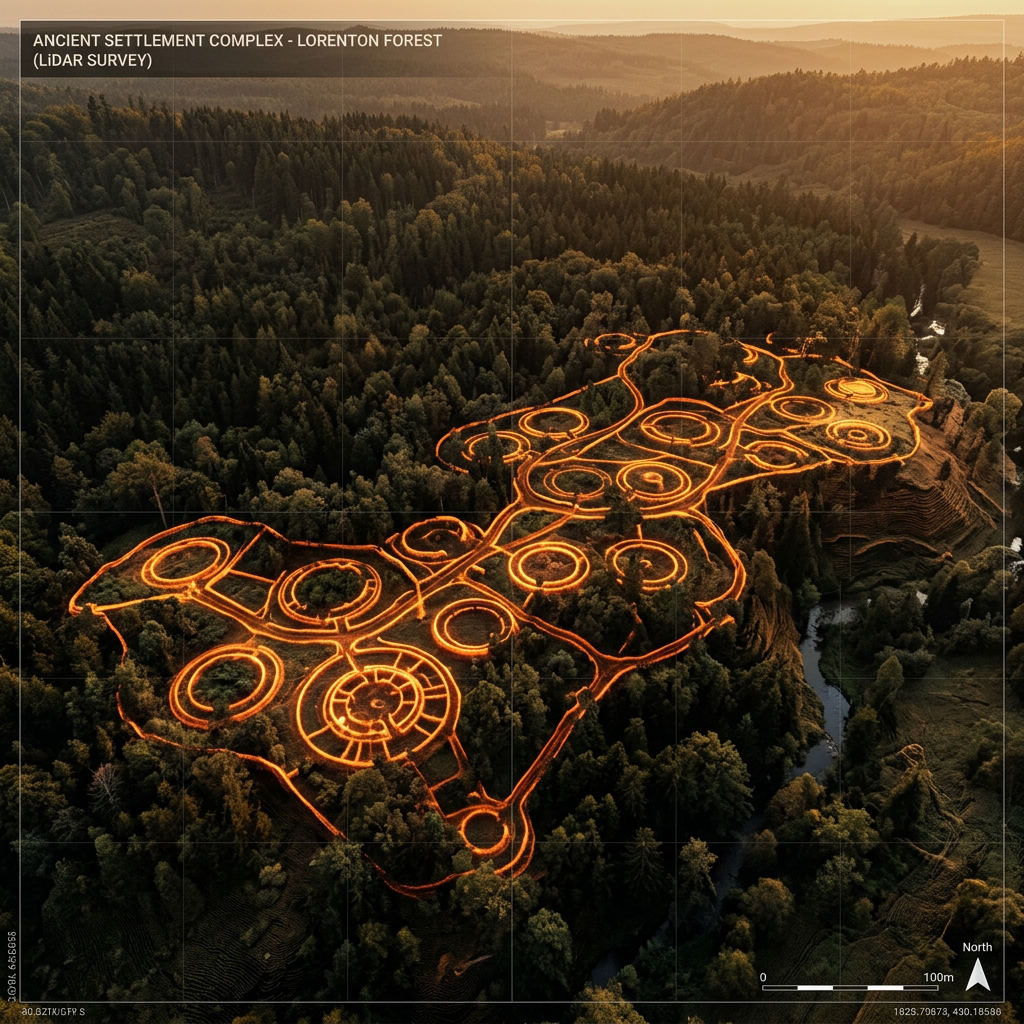
A high-resolution LiDAR survey conducted over the dense rainforests of the northern Amazon has revealed a previously unknown urban complex characterized by a concentric fortress-city design. Spanning over 15 square kilometers, the site features a series of circular defensive walls and deep hydraulic moats that were used for both protection and aquaculture. This discovery challenges the long-held view of the Amazon as a sparsely populated wilderness, proving instead the existence of highly organized, fortified polities.
The mapping data shows a central plaza connected to satellite villages via a network of elevated causeways that remained hidden under the canopy for centuries. Researchers believe the site served as a regional trade capital that controlled movement along the nearby river systems. The complexity of the earthworks suggests a sophisticated understanding of water management, allowing the inhabitants to maintain fertile agricultural plots within the city's defensive rings during both flood and drought seasons.