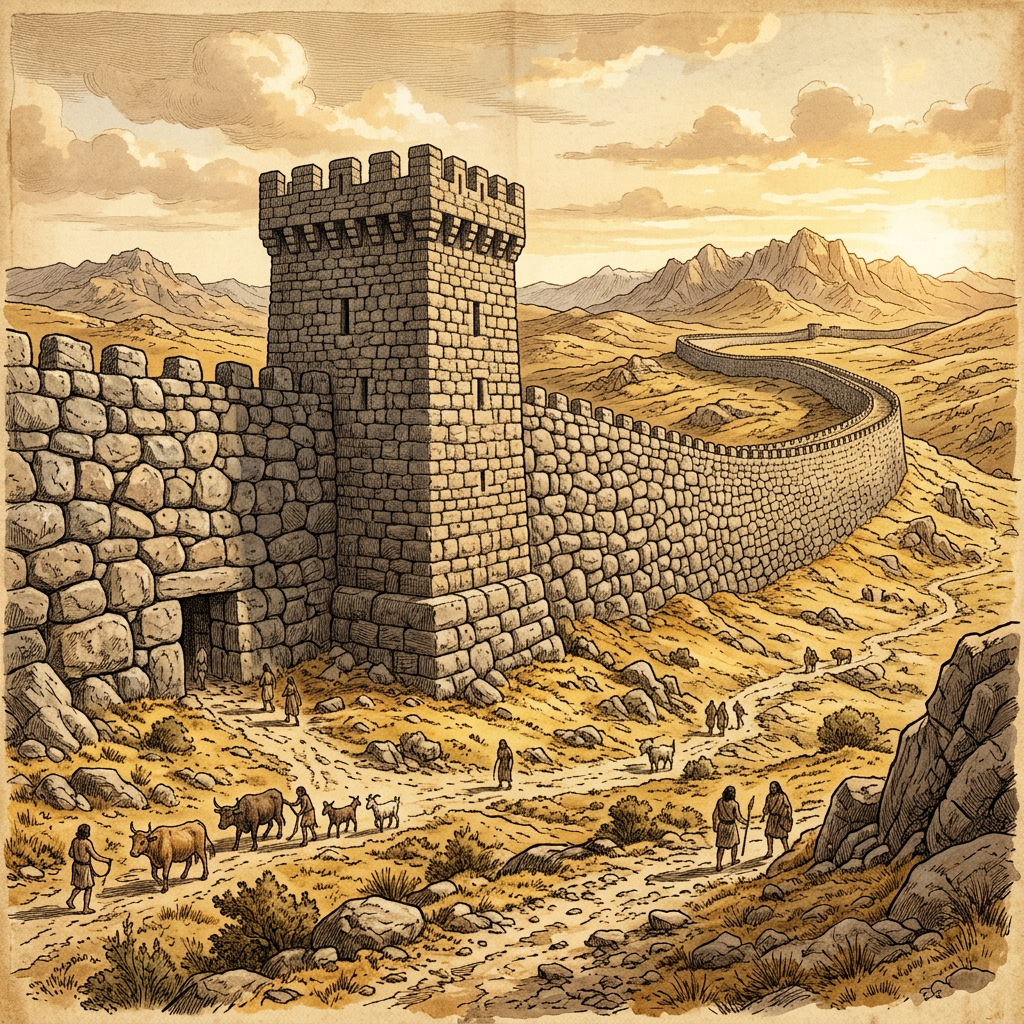
Archaeologists in Shaanxi Province have uncovered a monumental stone-fortified citadel dating back to the Longshan Culture (circa 2300–1900 BCE). The site is unique for its use of massive stone slabs in an era primarily known for rammed-earth construction. The citadel features four protruding corner bastions and a sophisticated gatehouse system designed to funnel attackers into narrow kill-zones, representing the height of prehistoric military engineering in East Asia.
Inside the walls, the team identified specialized storage pits containing charred remains of millet and rice, as well as a centralized ritual platform decorated with polished nephrite jade inserts. This urban center likely served as a regional powerhouse that controlled the surrounding Loess Plateau. The discovery of high-quality ceramic kilns within the city limits further suggests that the citadel was a hub for both defense and the production of prestige goods for a burgeoning elite class.