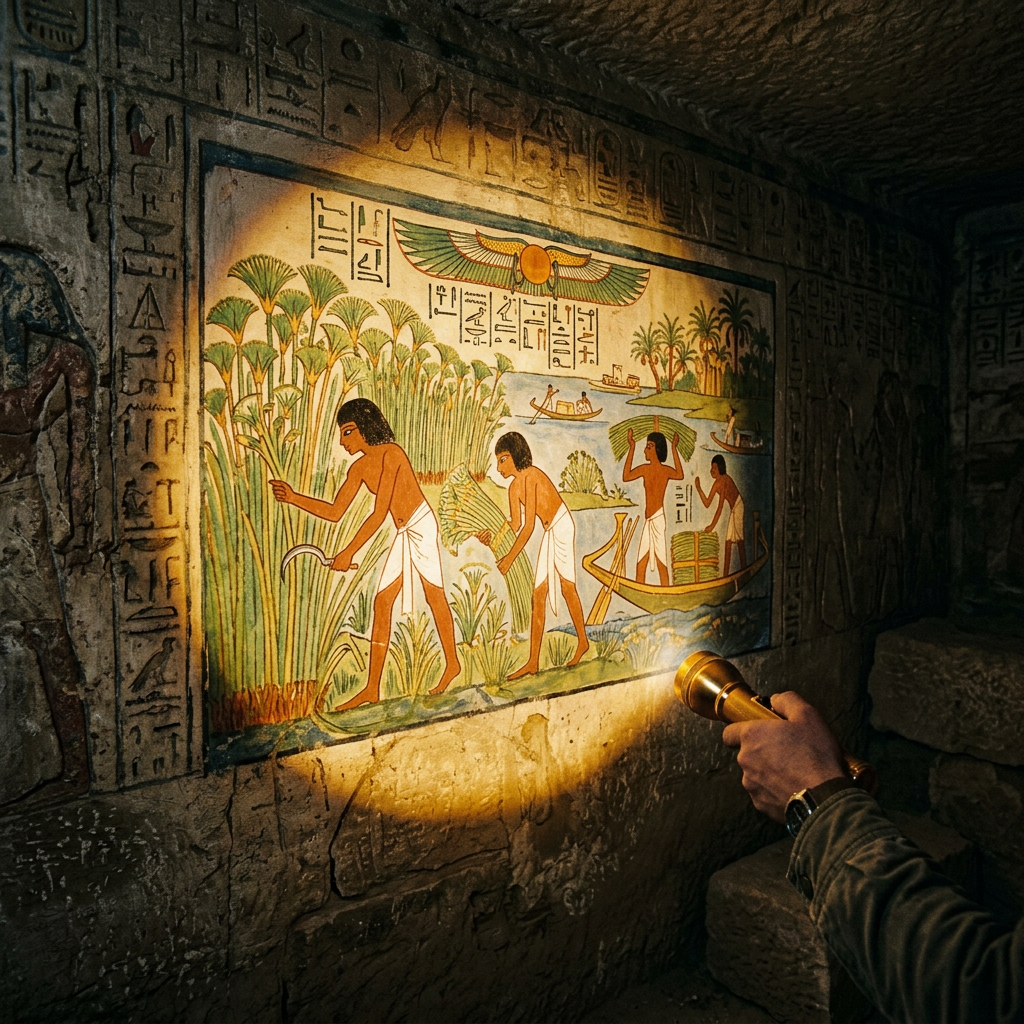
In the necropolis of Lisht, an Egyptian mission has discovered the intact tomb of a Middle Kingdom official named Senwosret-Ankh, who held the unique title of Overseer of the Royal Scribes’ Paper-Supply. The burial chamber remains perfectly preserved, featuring vibrant wall paintings that detail the entire lifecycle of papyrus production—from the harvesting of reeds in the Delta marshes to the specialized pressing and drying processes used to create high-quality scrolls for the pharaoh's administration.
Found within the sarcophagus chamber were several miniature wooden models of papyrus-processing workshops, complete with tiny figures holding stone smoothers and drying racks. Most significantly, the tomb contained a set of actual bronze harvesting sickles and specialized wooden scrapers used for stripping papyrus pith, which have never before been found in such a pristine state. These artifacts provide essential insights into the industrial bureaucracy that sustained Egypt's literal and metaphorical paper trail during the 12th Dynasty.