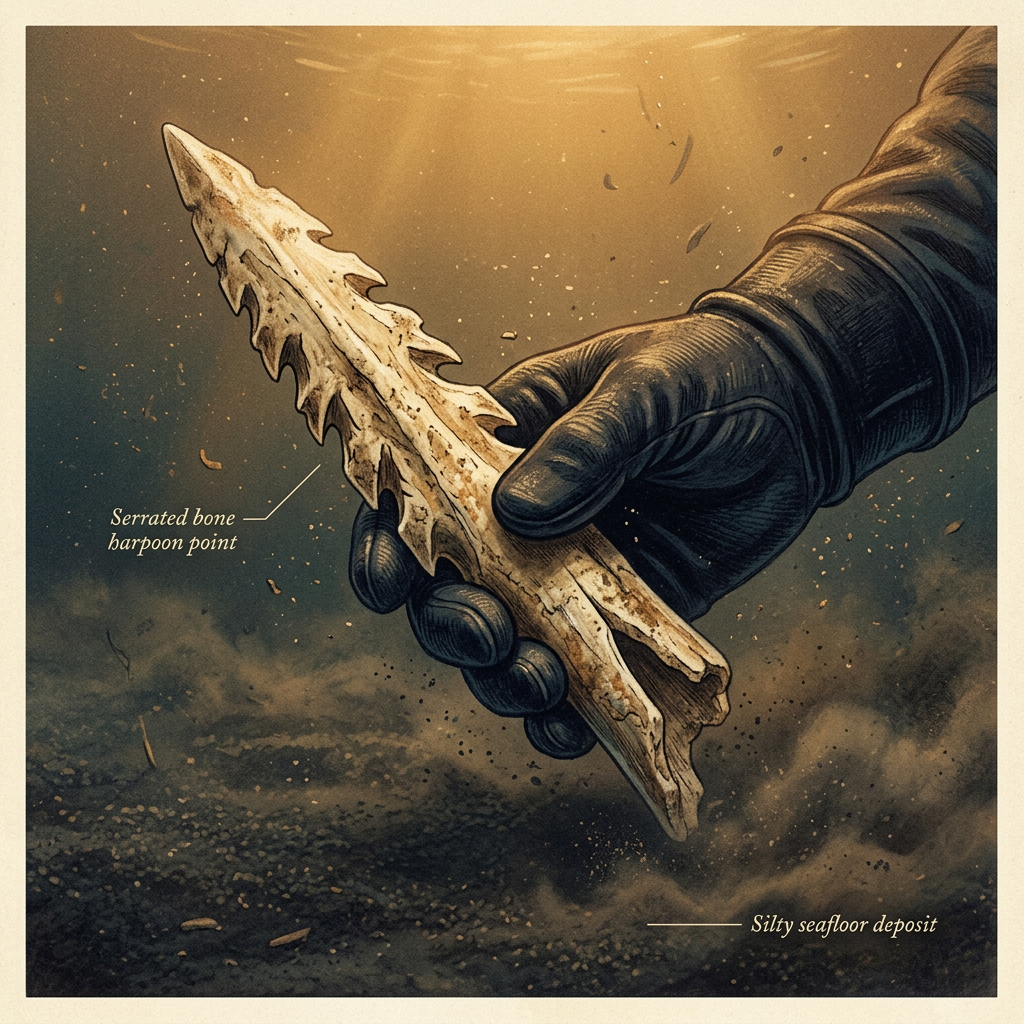
Marine archaeologists using advanced deep-sea dredging and sonar have identified an 8,000-year-old Mesolithic bone-tool factory on the submerged Doggerland Ridge, located beneath the North Sea. The site, which was once a thriving marshland connecting Britain to mainland Europe, has yielded over two hundred antler and bone artifacts. The concentration of debitage—tiny flakes of bone left over from the manufacturing process—indicates that this was a permanent workshop for the production of high-performance fishing and hunting gear.
Most extraordinary are the intact harpoon fragments, some of which still show traces of resin used to bind them to wooden shafts. These tools were used by early Europeans to hunt large marine mammals and sturgeon in the rich estuaries of the prehistoric landscape. Because the site was quickly inundated by rising sea levels and sealed under layers of anaerobic silt, the organic materials have been preserved with incredible detail, offering a rare window into the technical mastery of Mesolithic hunter-gatherer societies.