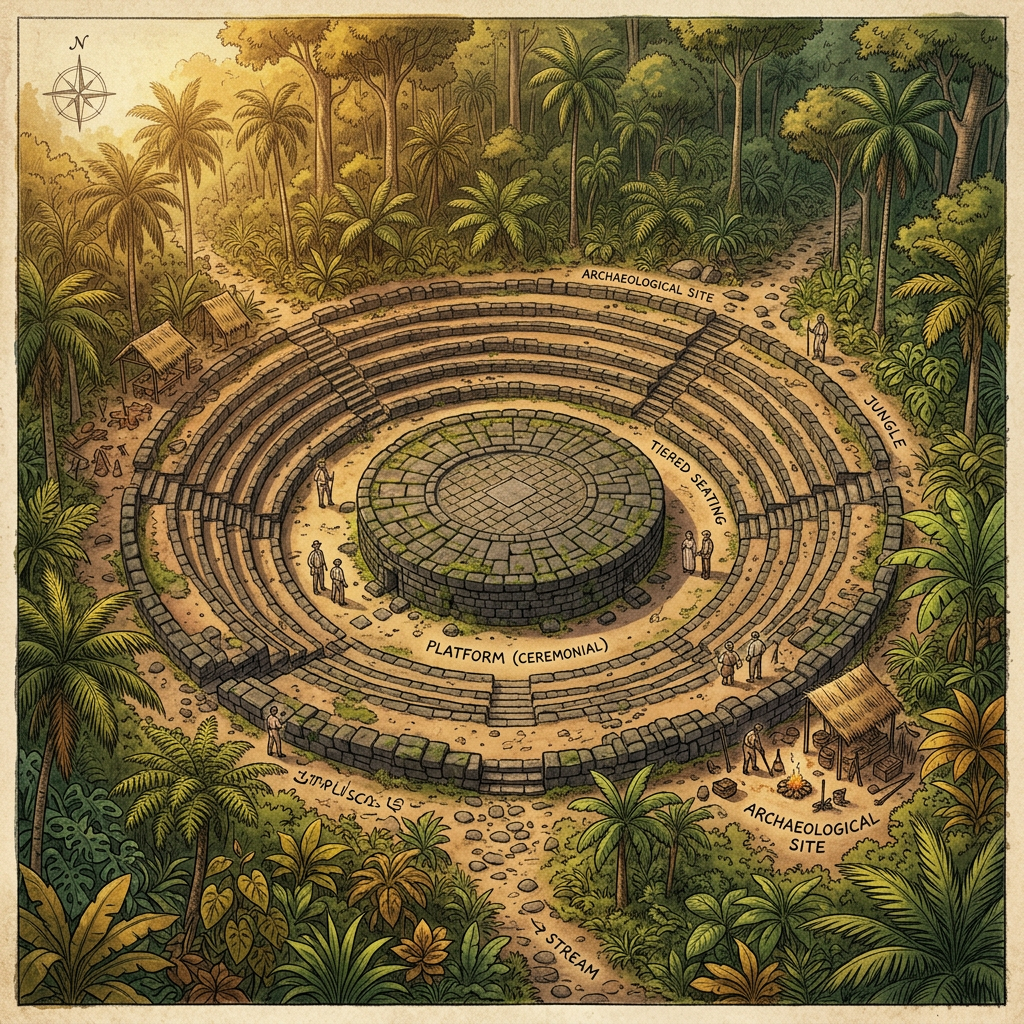
Archaeologists in Kerala have unearthed a monumental basalt-paved theater dating back to the late Sangam period. The structure, located near the ancient port of Muziris, features a raised circular platform and tiered seating for hundreds. The design and location suggest it was the primary venue for the 'Spirit-Dancer' festivals, ancient precursors to the classical performing arts of South India, where masked performers portrayed ancestral deities to ensure seasonal rains.
Excavations beneath the paving stones revealed terracotta figurines of dancers wearing elaborate headdresses and bronze ankle bells that still retain their resonance. The presence of specialized drainage systems for 'sacred libations' indicates that the performances were part of a larger ritual complex involving communal bathing and water blessings. This discovery underscores the deep antiquity of theatrical traditions in the Indian subcontinent and their central role in ancient community life.