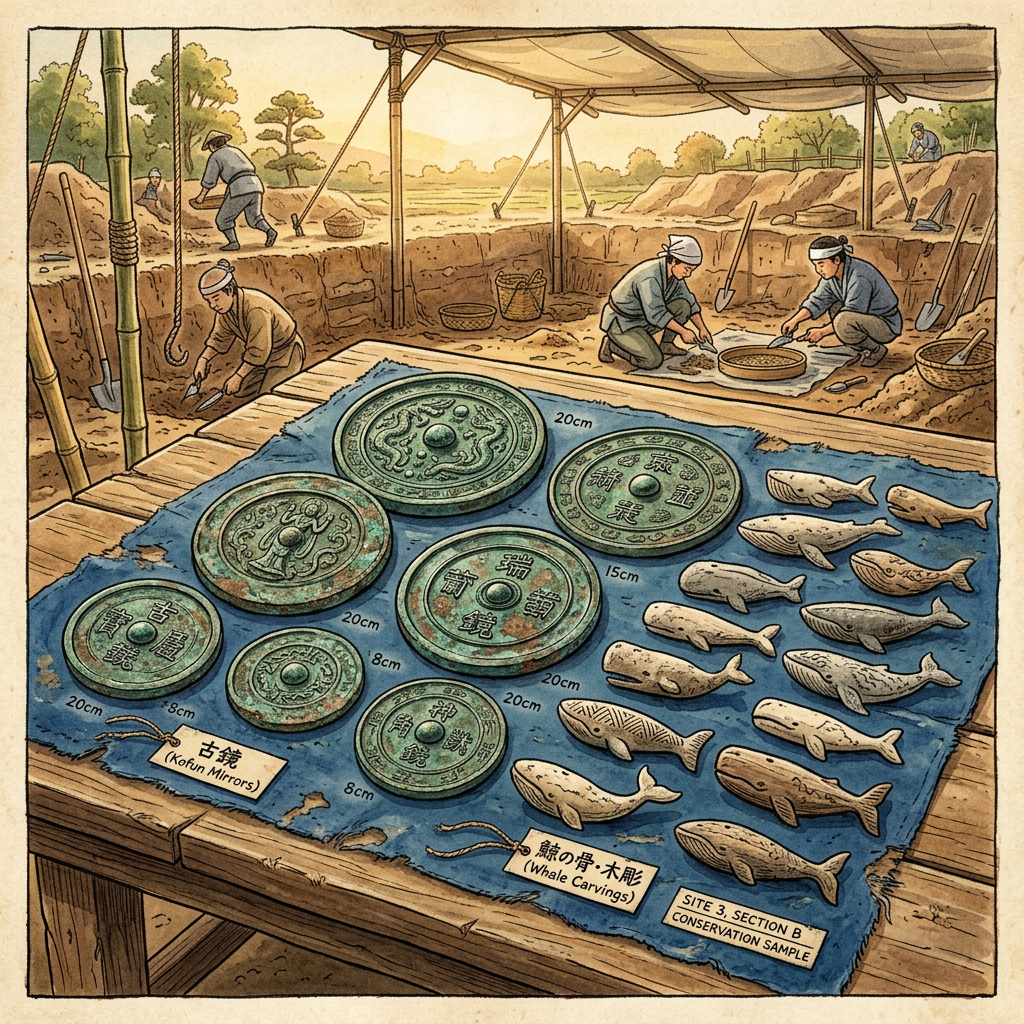
Archaeologists in Saga Prefecture, Japan, have excavated a unique maritime ritual site dating to the late Yayoi Period (c. 1st century CE). The site, situated on a coastal bluff overlooking the Ariake Sea, features several stone-lined pits containing votive offerings. Among the artifacts recovered are three Chinese-style bronze mirrors and several miniature whale figurines carved from whalebone, suggesting the site was used for ceremonies to appease sea deities or ensure successful whaling expeditions.
This discovery highlights the importance of marine resources and maritime trade to the Yayoi people. Dr. Kenji Sato of the University of Tokyo noted that the presence of high-status mirrors alongside local whalebone carvings indicates a complex religious practice that blended imported continental prestige goods with indigenous coastal traditions.