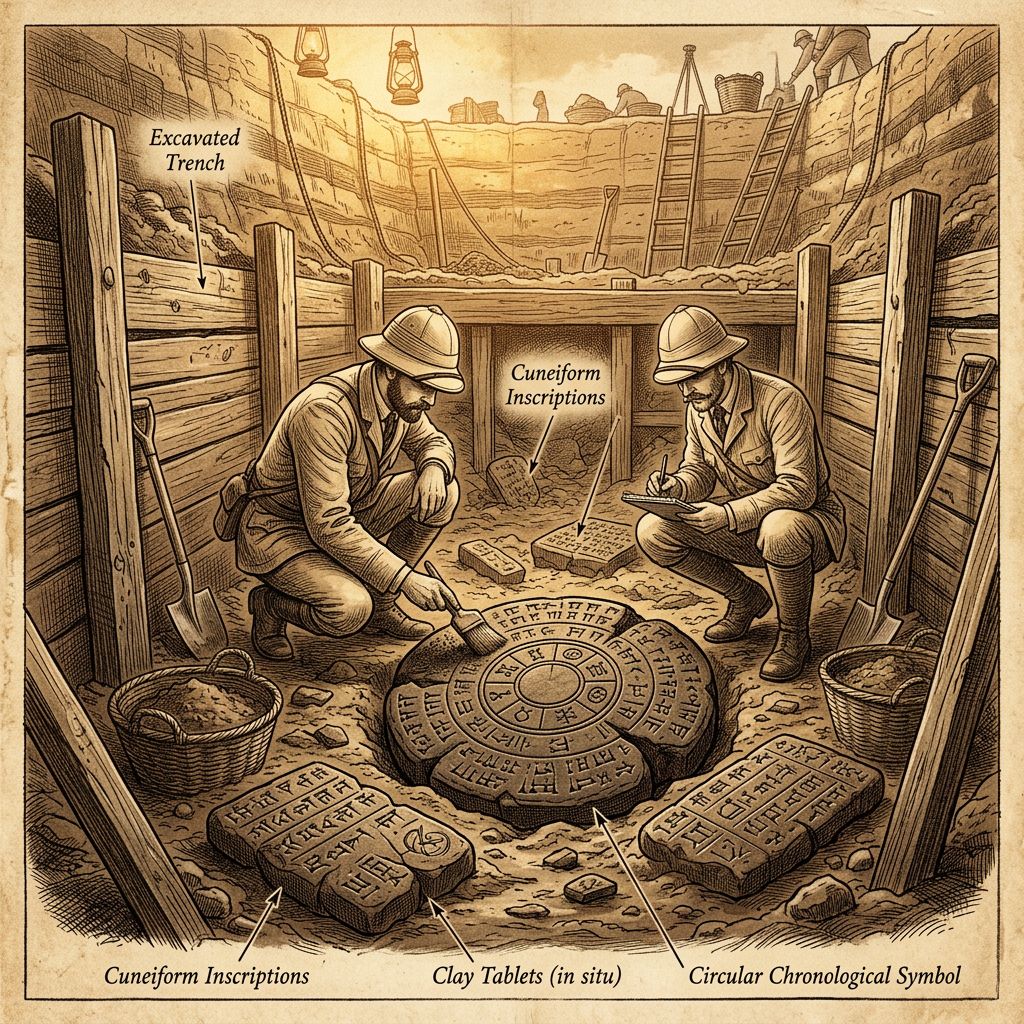
Excavations near the Ghaggar-Hakra basin have revealed a set of clay tablets dated to the 6th-century BCE, inscribed with the 'Kala-Chakra-Niti' or the 'Philosophy of Temporal Responsibility.' This ancient wisdom tradition emphasizes that every action carries a specific ethical weight relative to the moment of its execution, suggesting a highly sophisticated early understanding of situational ethics and cosmic timing.
Unlike later fatalistic interpretations of time, these tablets advocate for 'Kala-Kushala'—the skill of acting in perfect alignment with the unfolding of natural cycles. This discovery provides the first physical evidence of a pre-Mauryan ethical system that integrates environmental observation with personal moral agency, reshaping our understanding of early Vedic social structures.