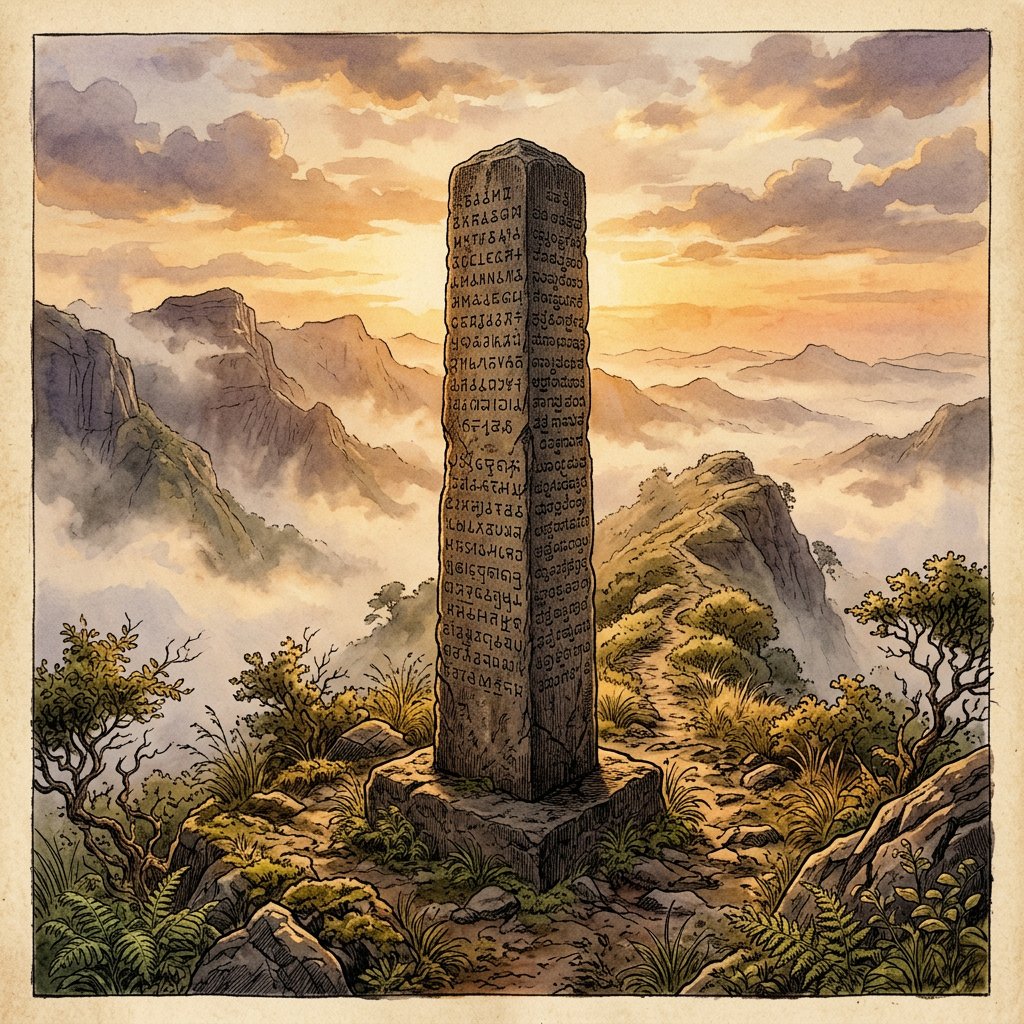
In the remote high-altitude regions of the Western Ghats, archaeologists have found a series of granite pillars featuring the 'Dharma-Stambha' inscriptions. Dating to the 4th-century BCE, these texts define the 'Philosophy of Civil Courage' (Dhriti-Niti), focusing on the ethical obligation of the individual to uphold Truth even when it conflicts with the directives of the state or social hierarchy.
The inscriptions are written in an early form of Brahmi and describe 'Satyashila'—the character of one who is anchored in the absolute. This find is monumental because it records an early tradition of individualist ethics within the broader Vedic framework, suggesting that ancient Indian society had robust philosophical foundations for dissent and moral sovereignty long before the modern era.