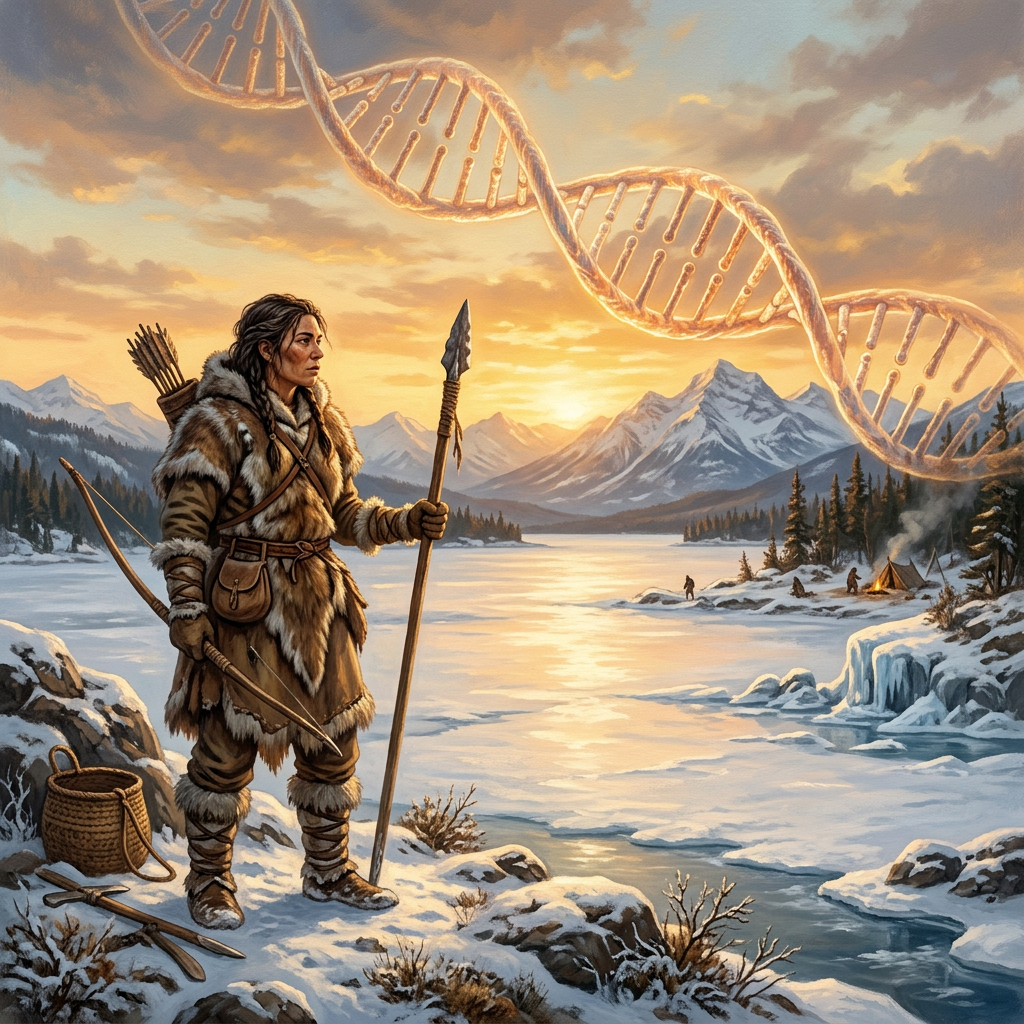
A team of paleogenomics experts at the Max Planck Institute for Evolutionary Anthropology has sequenced the genome of a Late Pleistocene hunter-gatherer discovered near Lake Baikal. The study, published in Science Advances, identifies a unique genetic mutation in the LRP5 gene, which is associated with the efficient metabolism of high-lanolin fats found in the pelts and fatty tissues of ancient woolly megafauna. This adaptation likely allowed these populations to thrive in extreme sub-arctic environments where plant-based nutrients were scarce.
The findings indicate a major genetic divergence occurring roughly 14,000 years ago, suggesting that environmental pressures at the end of the last glacial maximum drove rapid selection for specialized dietary processing. Furthermore, the analysis reveals that this specific 'Baikal lineage' contributed significantly to the genetic makeup of early maritime explorers who migrated across the Bering Land Bridge. This research provides a critical link in understanding how human metabolic evolution was shaped by the unique chemical compositions of Pleistocene prey species.