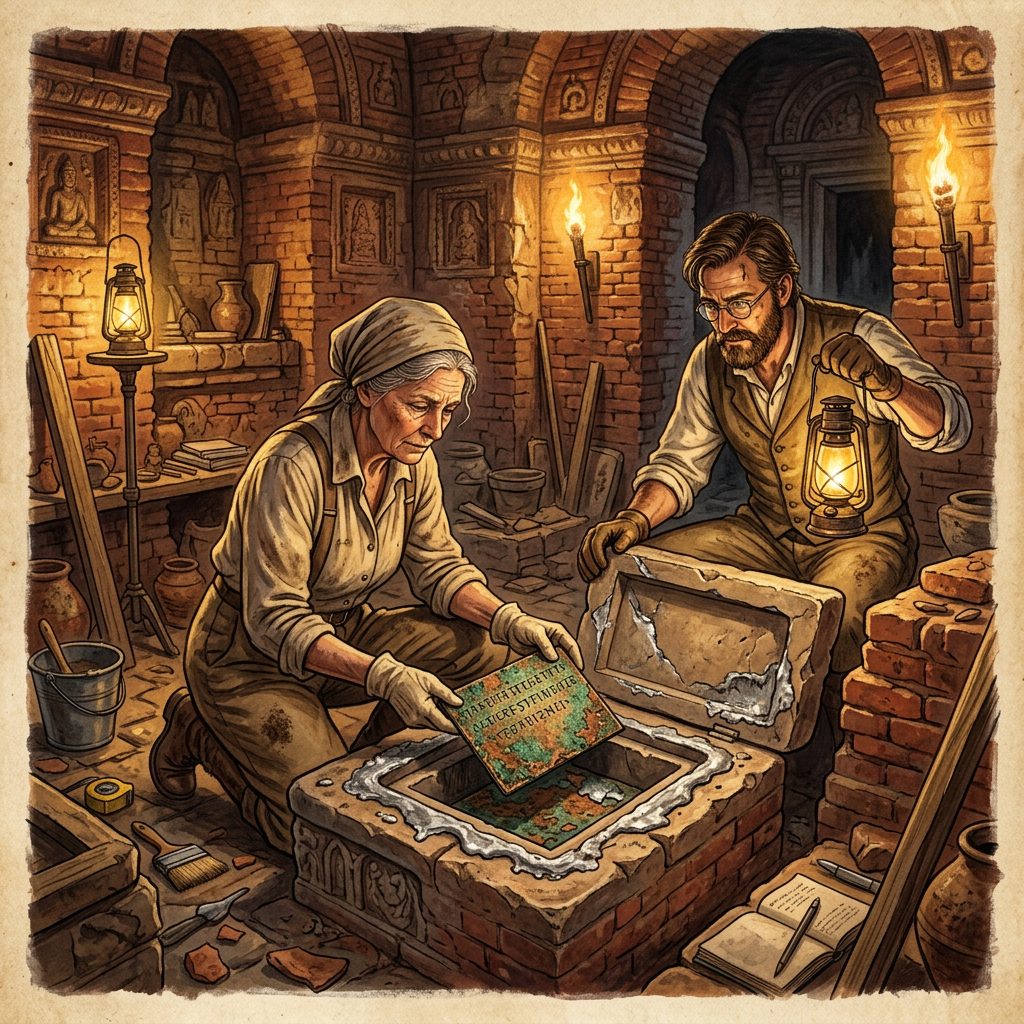
Ongoing restoration work on a 12th-century Sena Dynasty temple in the South 24 Parganas district of West Bengal has led to the discovery of three mercury-sealed ritual vaults beneath the main sanctum. The temple, built primarily of thin 'Lakhauri' style bricks, is one of the few surviving examples of pre-Islamic structural architecture in the region. The restoration team, led by state conservationists, discovered the vaults while reinforcing the temple's sinking plinth.
The vaults contained a series of copper-plate charters and tantric ritual implements, including a unique double-ended 'Vajra' made of an unidentified dark alloy. The use of mercury as a sealant for these vaults is an unprecedented find in Bengal's temple archaeology, suggesting a link to ancient alchemical traditions that flourished under the Sena kings. The copper plates are currently being cleaned to decipher details regarding the temple's patronage and the specific deity originally installed in the now-empty sanctum.
Local heritage enthusiasts and historians are excited by the find, which promises to fill gaps in the history of the late medieval period in Bengal. The West Bengal Heritage Commission has announced that the artifacts will be displayed in a dedicated gallery once the structural restoration of the temple is completed later this year.