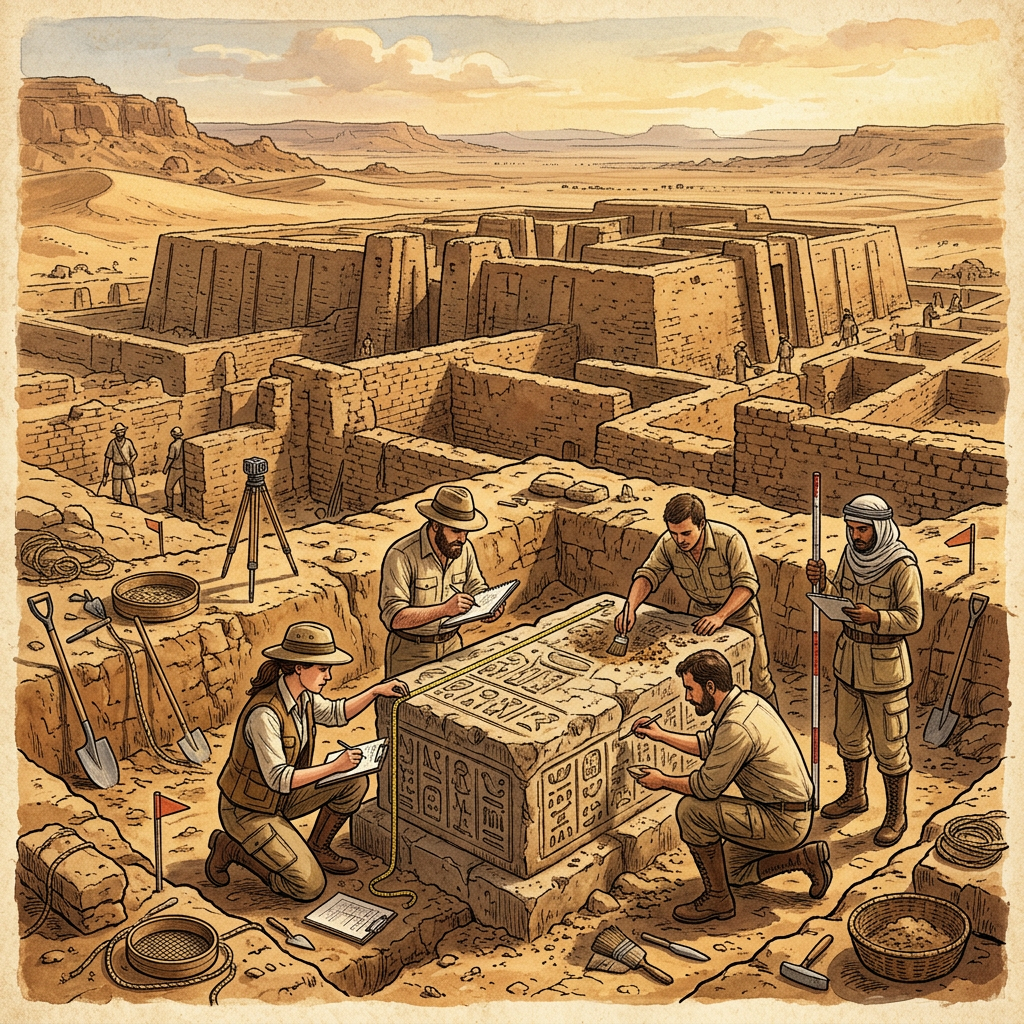
A team of international archaeologists has unearthed the foundations of a massive temple dedicated to Enlil, the Sumerian 'Lord of Air,' in the ancient city of Nippur, Iraq. Dating back to the late 3rd millennium BCE, the temple is one of the largest religious structures ever identified in Mesopotamia. The excavation has revealed the lower courses of a zigguart-like platform built from sun-dried mud bricks, reinforced with reed mats and bitumen, showcasing the peak of Sumerian architectural ingenuity.
Among the most significant finds within the temple precincts is a cache of cuneiform tablets detailing the temple’s daily accounts and the complex rituals associated with the 'Akitu' New Year festival. One tablet specifically describes the installation of a golden throne for the god, which researchers believe may still be located in a yet-to-be-excavated lower vault. The temple layout includes a series of private chambers for high priests, featuring rare evidence of painted wall decorations depicting mountain landscapes.
The discovery confirms Nippur's status as the supreme religious capital of the Sumerian world. The State Board of Antiquities and Heritage (SBAH) in Iraq is collaborating with international partners to use satellite imagery and ground-penetrating radar to map the entire temple district, which remains one of the most promising archaeological sites in the Fertile Crescent.