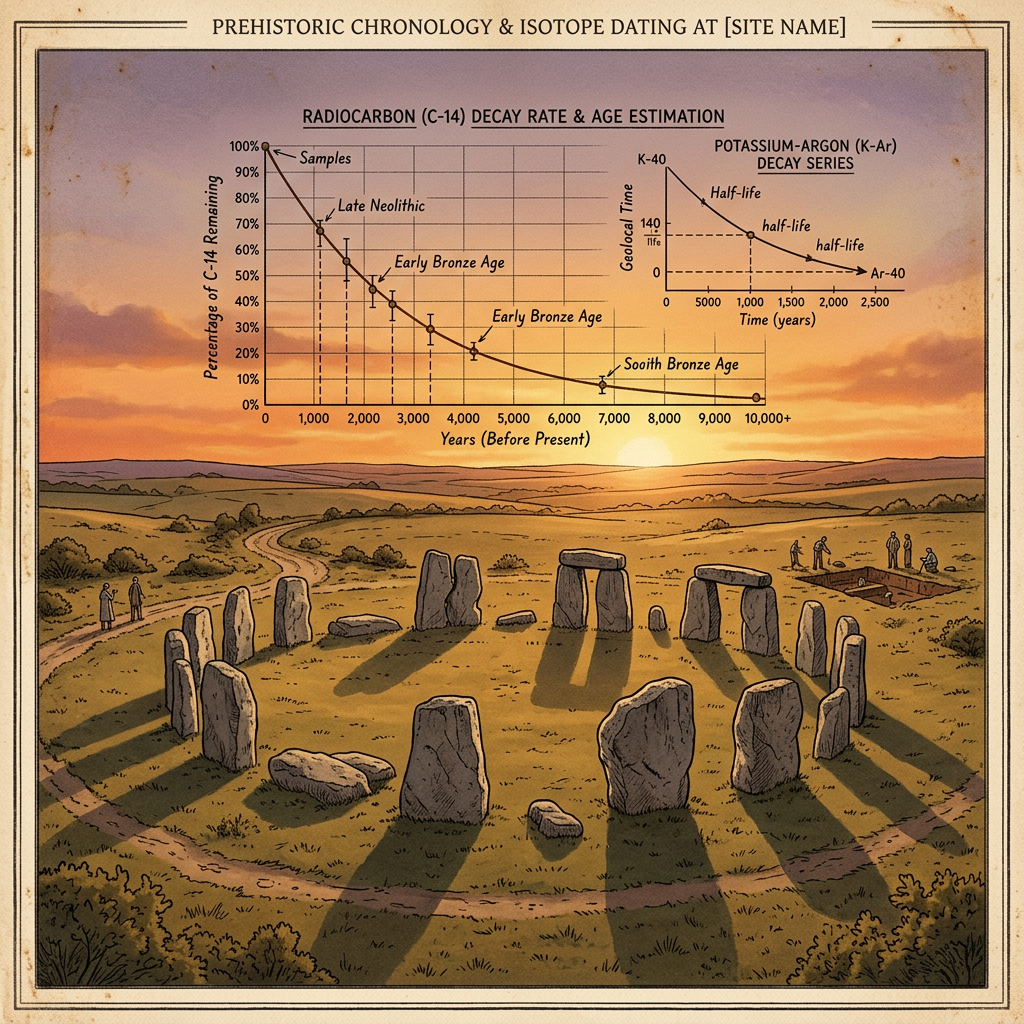
A major study published in Archaeometry has utilized a dual-nuclide surface exposure dating method to accurately determine the construction phases of stone circles in southern Portugal. By measuring the accumulation of cosmogenic isotopes on the megalithic surfaces, researchers have refined the timeline for these monuments to between 4800 and 4200 BCE.
This precision allows for a better understanding of the socio-political shifts that led to the rise of megalithism in the Atlantic fringe of Europe. The cross-calibration between Chlorine-36 and Beryllium-10 offers a new standard for dating large-scale stone structures where organic material for carbon dating is absent.