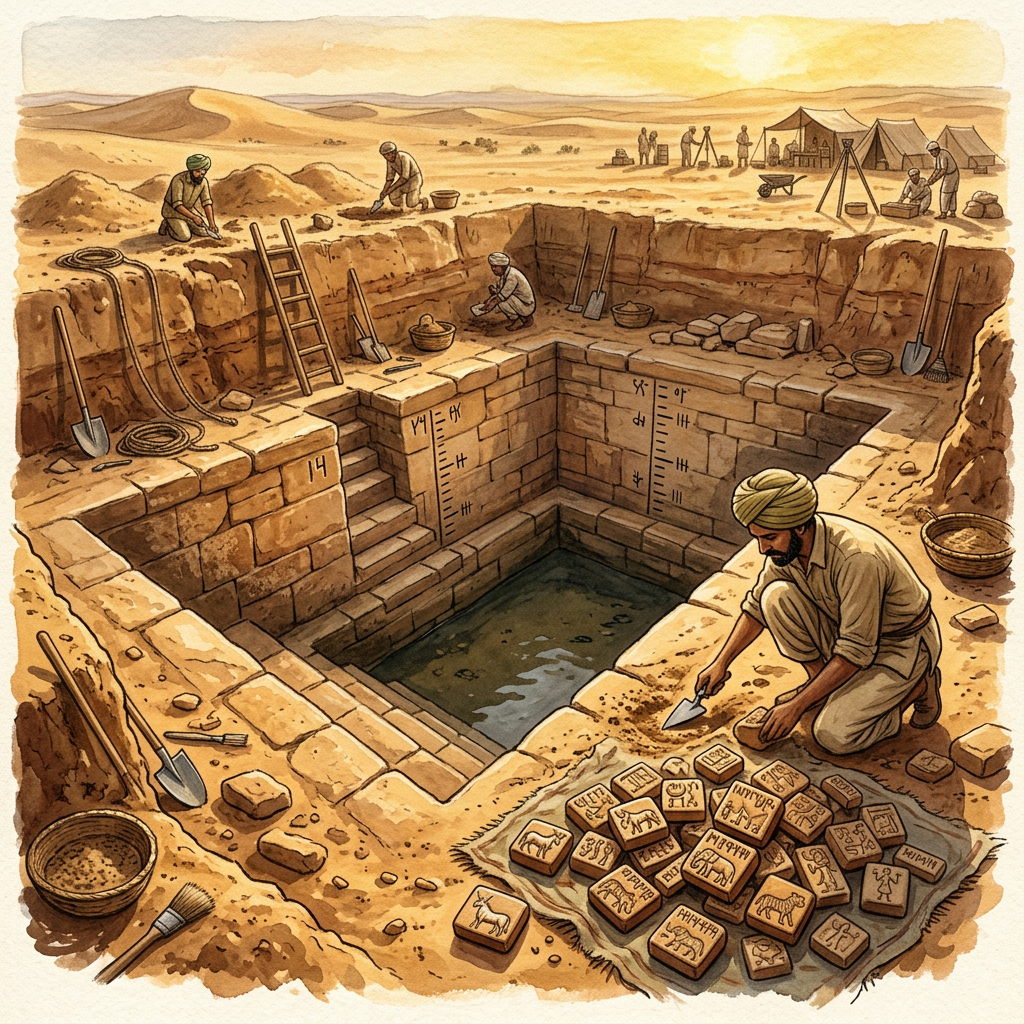
Excavations at the newly identified 'Maru-Daro' site in Rajasthan's Thar Desert have uncovered a specialized administrative complex dubbed the Bureau of Hydro-Taxation. Archaeologists discovered a cache of unique clay seals and tablets that specifically record water-rights allocations and irrigation fees paid by local farmers to the central Indus Valley authorities. This is the first definitive evidence of a bureaucratic system managing water as a taxable commodity in the ancient world.
The complex is located adjacent to a massive subterranean reservoir system, featuring standardized water-depth markers carved into the stone walls. These markers appear to have been used by Harappan officials to determine the annual tax rate based on available water levels. The presence of such a sophisticated hydro-regulatory body explains how Harappan cities maintained agricultural stability in an increasingly arid desert environment through precise resource management.