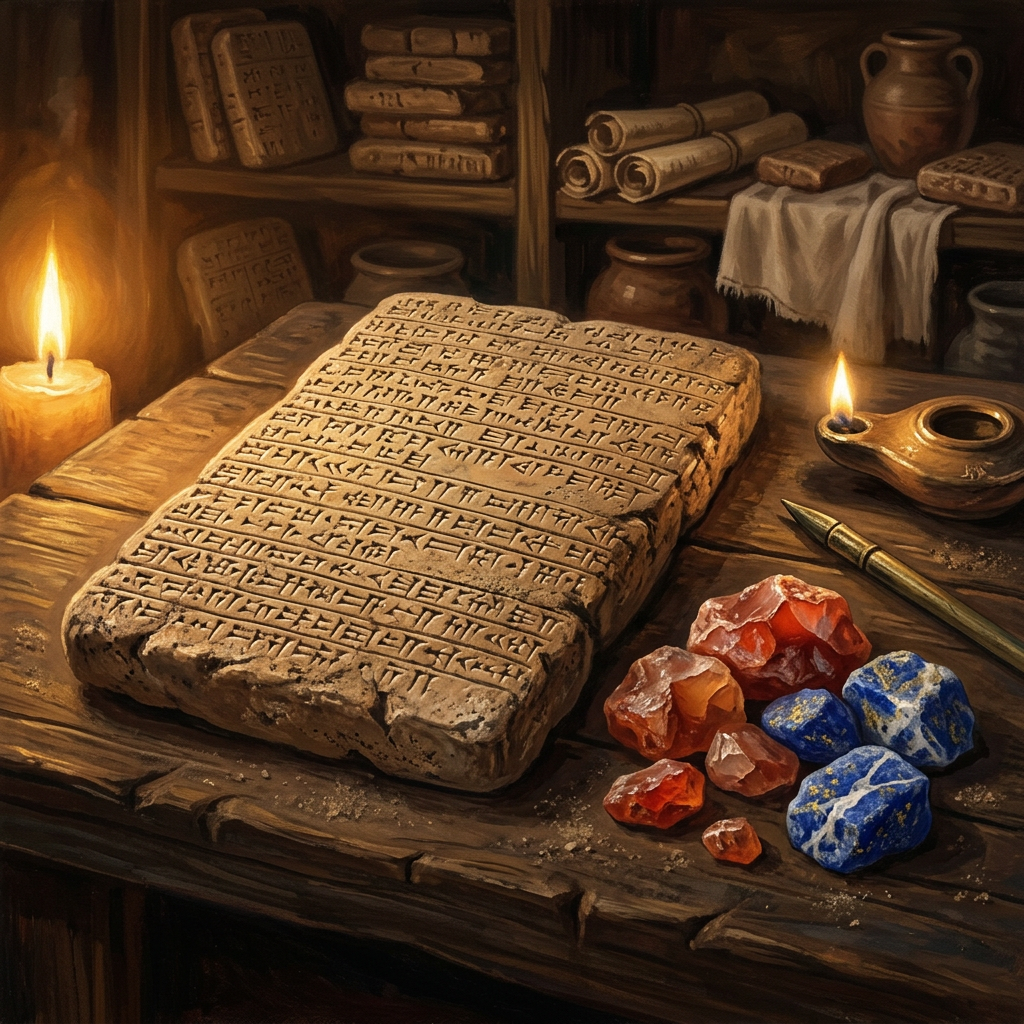
Archaeologists excavating the administrative quarter of Ancient Eridu have discovered a cuneiform archive belonging to the 'Master of the Royal Lapidaries.' The tablets detail the acquisition of raw gemstones, including carnelian and lapis lazuli, through maritime trade with the Land of Meluhha (the Indus Valley). These records provide a precise accounting of the weights and qualities of stones delivered to the palace workshops to be crafted into royal cylinder seals and jewelry.
The archive also contains unique crafting manuals that describe the techniques used to drill and polish hard stones using diamond-tipped tools. This discovery confirms the existence of highly specialized industrial guilds in Mesopotamia and underscores the complexity of the 2nd-millennium BCE international gem trade. The find is considered a milestone in understanding the economic relationship between the Sumerian city-states and their distant trading partners.