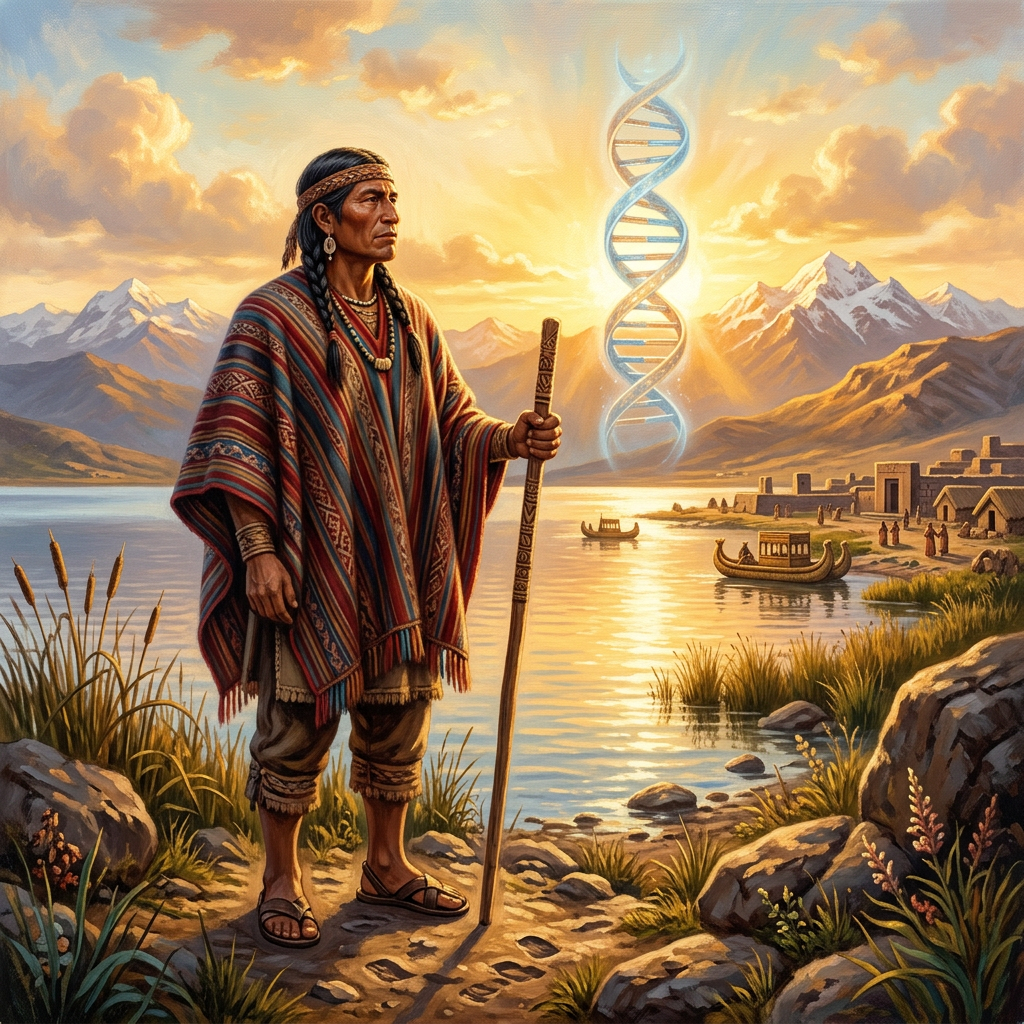
In a landmark paleogenomic study, researchers have sequenced the DNA of 12,000-year-old remains found near Lake Titicaca, uncovering the earliest known genetic signature for resilience against high-intensity ultraviolet (UVB) radiation. The analysis reveals a specific selection in the DDB2 gene, which is critical for DNA repair following UV-induced damage, marking a specialized evolutionary adaptation to the thin atmosphere of the high Andes.
The findings, published in Nature Paleogenomics, suggest that early human settlers in South America developed these genetic traits within just a few generations of inhabiting the Altiplano. This discovery provides new insights into the speed of human genetic evolution and the physiological pressures faced by Pleistocene populations transitioning into extreme high-altitude environments.