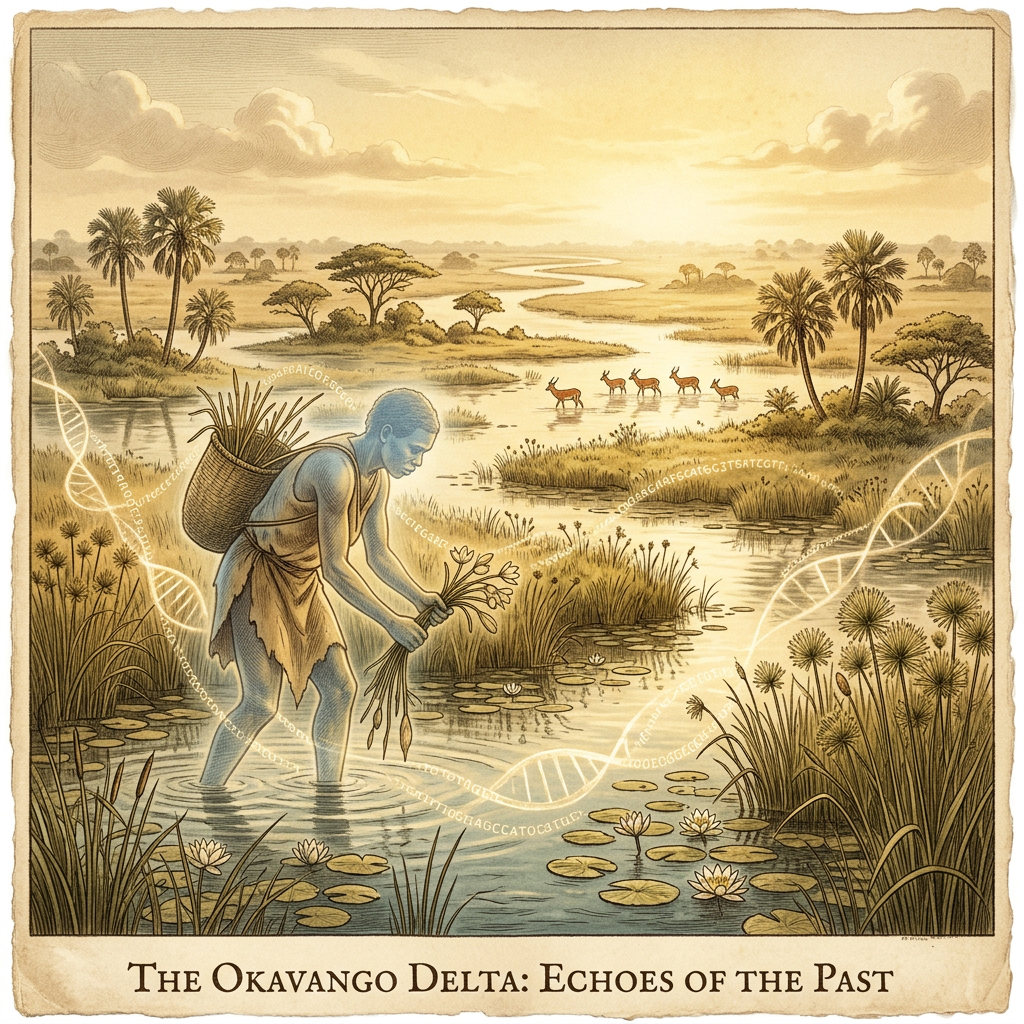
New anthropological research published in the Journal of Anthropological Genetics describes a unique genetic lineage discovered in 10,000-year-old remains from Botswana's Okavango Delta. The study identifies a 'ghost' population of hunter-gatherers who possessed rare genetic markers for the metabolism of high-saponin flora, allowing them to safely consume various aquatic plant species that were toxic to other contemporary groups.
The analysis suggests this population remained genetically isolated for millennia, thriving in the wetland ecosystem by exploiting a unique dietary niche. This paleogenomic breakthrough highlights the diversity of early human survival strategies in Africa and the role of localized environmental toxins in driving genetic divergence during the Early Holocene.