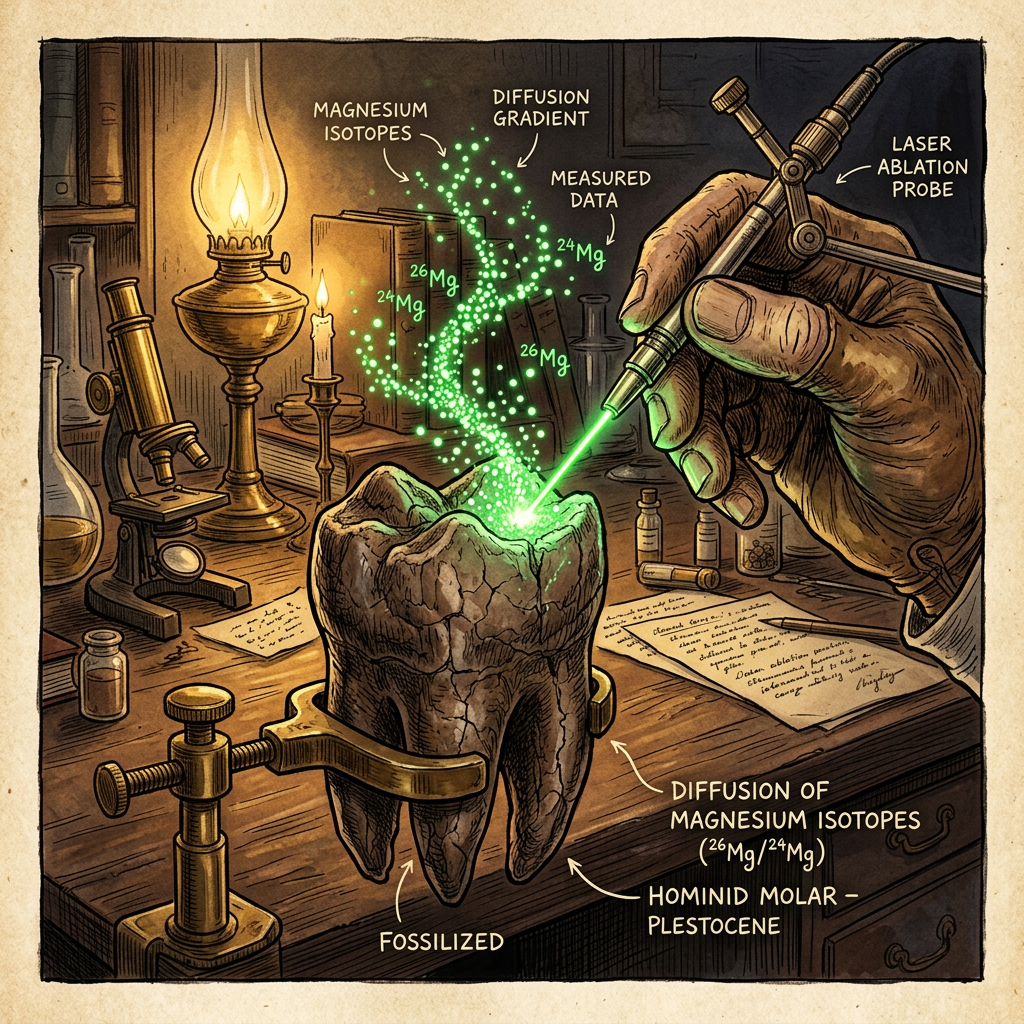
A breakthrough in geochronometry has been achieved using a novel Magnesium-25 isotopic diffusion methodology to date fossilized hominid remains in the Siwalik Hills. This technique, which measures the micro-diffusion of magnesium ions between tooth enamel and surrounding sediments, has refined the age of the 'Siwalik Hominid' fragments to 1.4 million years, significantly older than previous estimates.
The study, published in Geochronometria, provides a more stable alternative to traditional uranium-series dating in porous environments. This archaeological dating advancement offers a new tool for reconstructing the early migration of Homo erectus into South Asia, suggesting a much earlier arrival and prolonged occupation of the Himalayan foothills than previously documented.