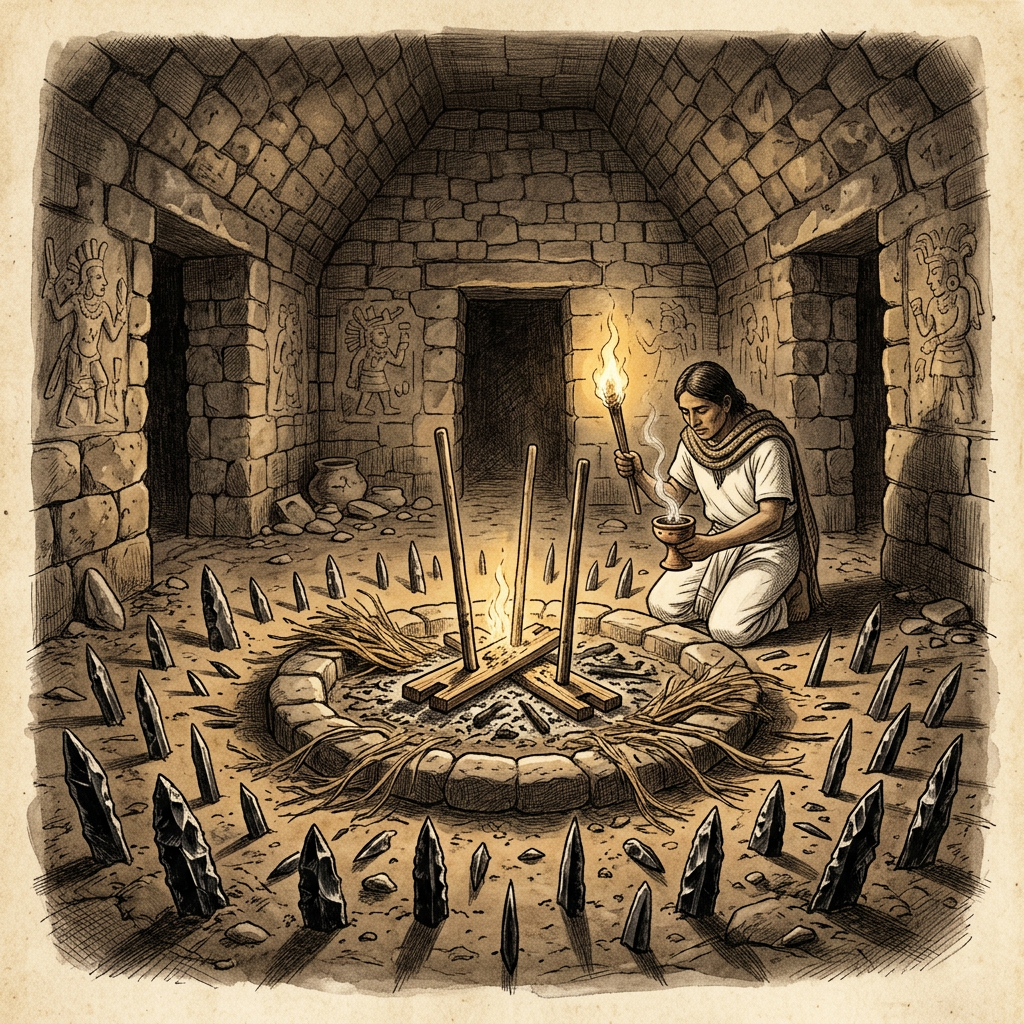
Excavations near the Pyramid of the Moon at Teotihuacán have revealed a unique obsidian-lined ritual chamber containing ceremonial fire-drills. Dated to approximately 200 AD, these tools are associated with the "New Fire" ceremony, a critical Mesoamerican rite performed to ensure the continuation of the sun. The presence of these artifacts suggests that the festival was a foundational element of Teotihuacán's urban identity centuries earlier than previously estimated.
The chamber also contained "butterfly-wing" ceramic ornaments and charred remains of sacred woods used in the first ignition of the ceremonial flame. INAH researchers emphasize that the site served as a focal point for thousands of pilgrims who traveled to the city to receive the "new light" for their own domestic hearths, reinforcing the city's role as a regional spiritual hub.