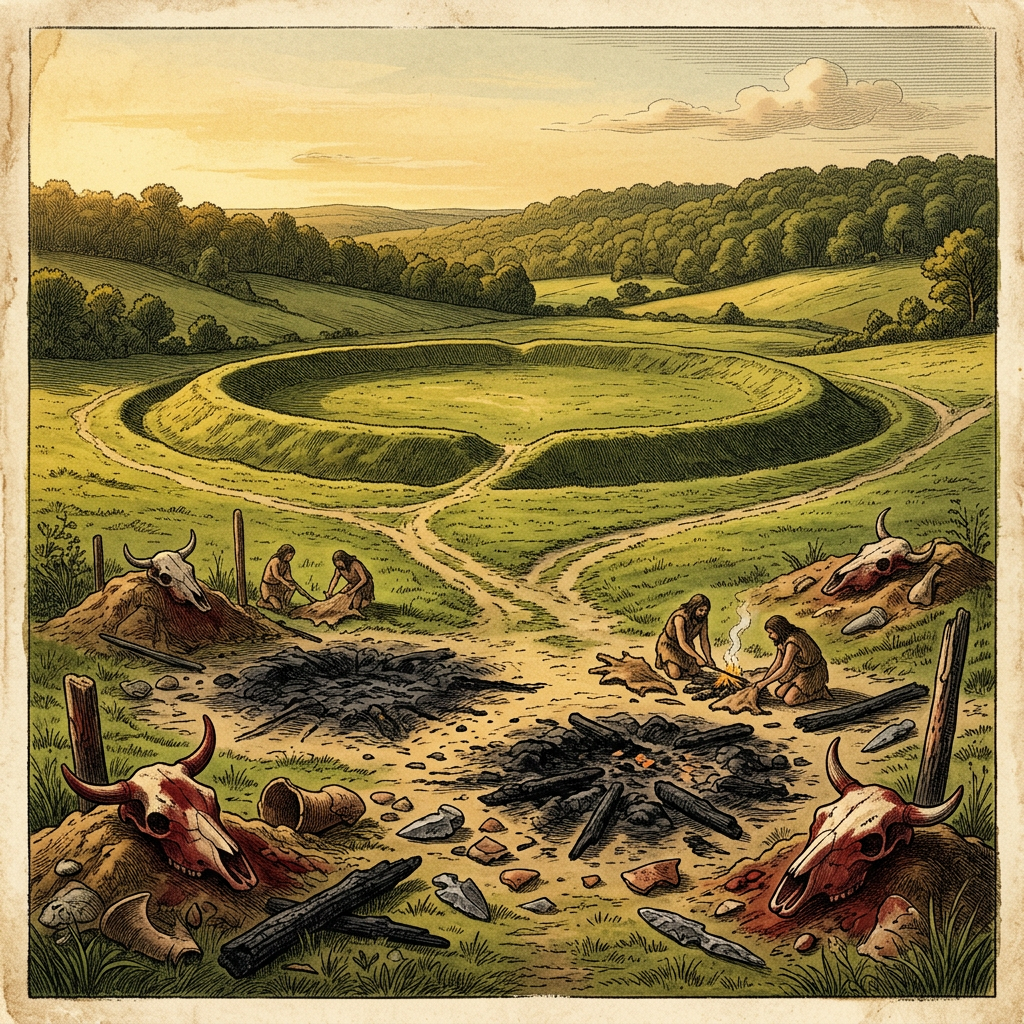
A significant discovery in Ireland's Boyne Valley has revealed a 4,000-year-old ceremonial enclosure featuring "ochre-stained" cattle skulls and large hearth structures. Archaeologists from the Discovery Programme suggest these remains are the earliest physical evidence of the Beltane fire festival. The positioning of the hearths suggests they were used for the ritual driving of livestock between twin fires to protect them from disease and ensure fertility.
The site also yielded "sun-burst" patterned flint tools, likely used in the carving of ritual symbols during the spring transition. This finding bridges the gap between Neolithic solar worship and the traditional Gaelic festivals recorded in later medieval texts, confirming the prehistoric roots of Irish seasonal celebrations.