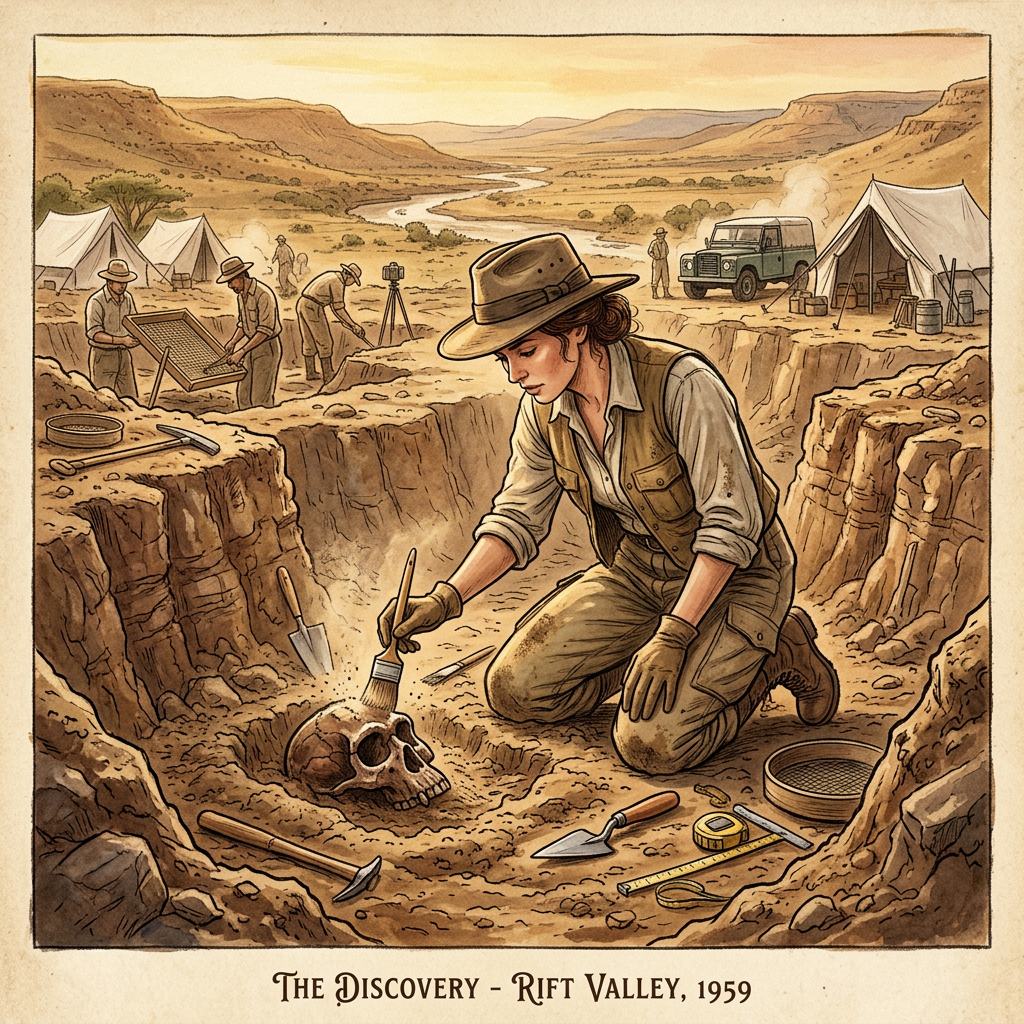
A breakthrough in the Narmada Valley of central India has led to the discovery of a hominid skull fragment dated to 1.2 million years ago. Found near the village of Hathnora, the specimen has been identified as a robust Homo erectus, providing concrete evidence that early humans inhabited the Indian subcontinent significantly earlier than previously confirmed. This find bridges a major gap between hominid sites in Africa and East Asia.
Accompanying the skull fragment were several Acheulean hand-axes and butchered animal bones, suggesting a sophisticated level of tool use and hunting behavior. The stratigraphy of the site has been meticulously analyzed to ensure the accuracy of the dating. This discovery challenges existing models of human dispersal, suggesting that the Narmada Valley served as a primary corridor for early human migration and evolution for over a million years.