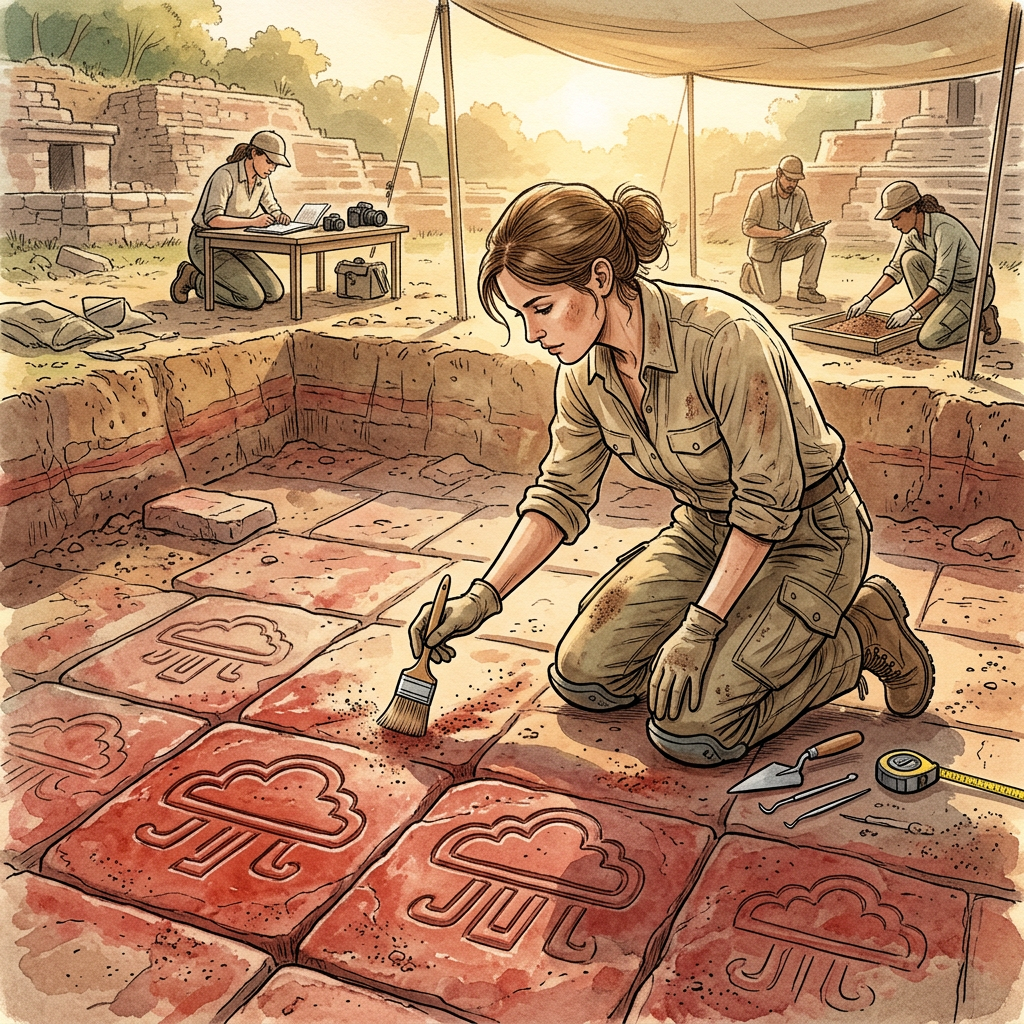
During restoration work at the Monte Albán archaeological site, researchers uncovered a previously unknown ritual pavement stained with deep red cinnabar pigments. The pavement is located at the entrance of a sacred precinct and is etched with symbolic representations of rain clouds and sprouting maize, dating back to 1000 BC.
Experts believe this area was the stage for the 'Earth-Renewal' festival, where the Zapotec elite performed bloodletting and pigment-scattering rites to ensure a successful agricultural season. The discovery provides a direct link between the earliest urban phases of Oaxaca and the enduring Mesoamerican traditions of seasonal world-renewal ceremonies still seen in modern indigenous festivals.