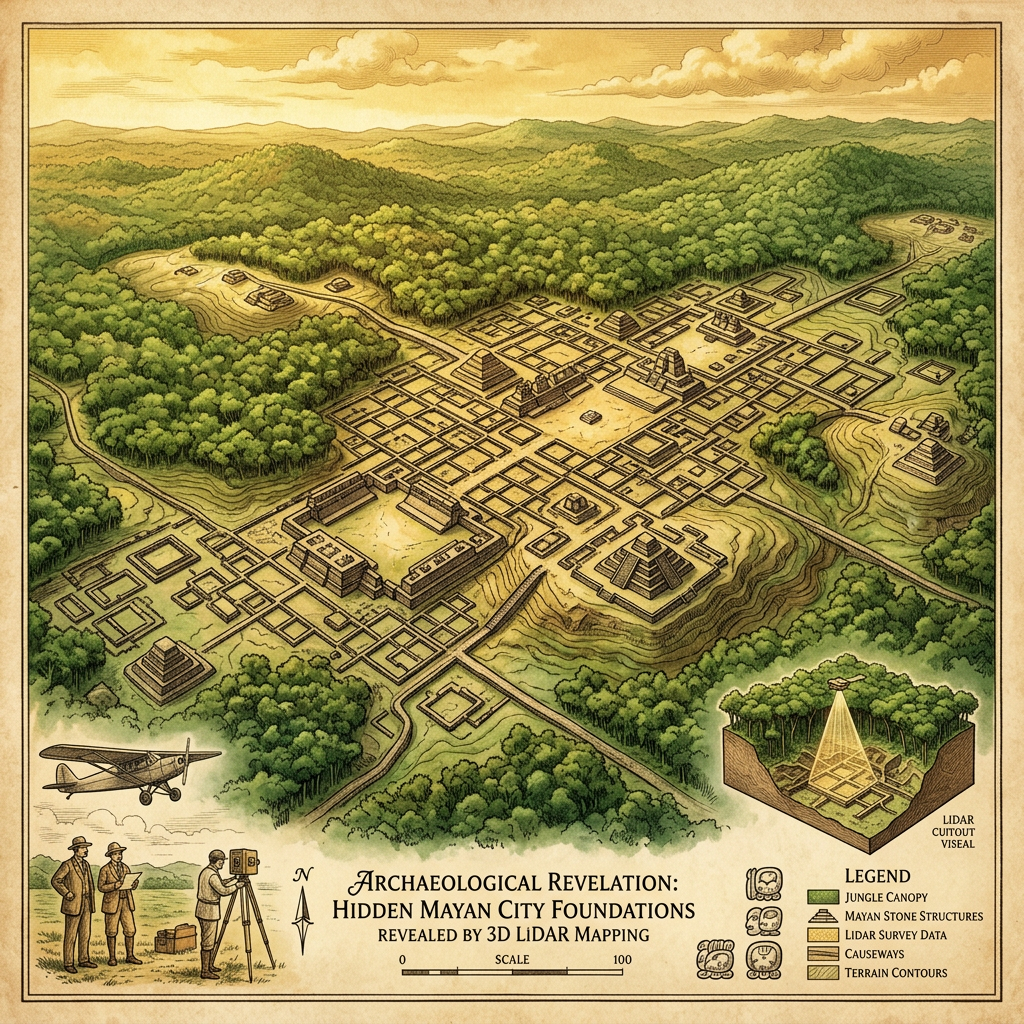
Using advanced airborne LiDAR technology, researchers have mapped a previously unknown Mayan industrial complex deep within the Campeche jungle. The survey identified a sprawling network of cacao-fermentation pits and massive stone-lined storage vaults spanning over 15 hectares. This site served as a centralized hub for processing raw cacao beans into high-value trade cakes, which were then transported via a series of artificial canals and paved wharves to the regional capital.
This discovery redefines our understanding of the Mayan economy, proving that mass-scale industrial processing was more prevalent than previously assumed. The LiDAR data also revealed defensive watchtowers surrounding the facility, indicating the immense value placed on cacao as a form of currency. Environmental analysis of the surrounding soil has already confirmed high concentrations of theobromine, the primary alkaloid found in chocolate.