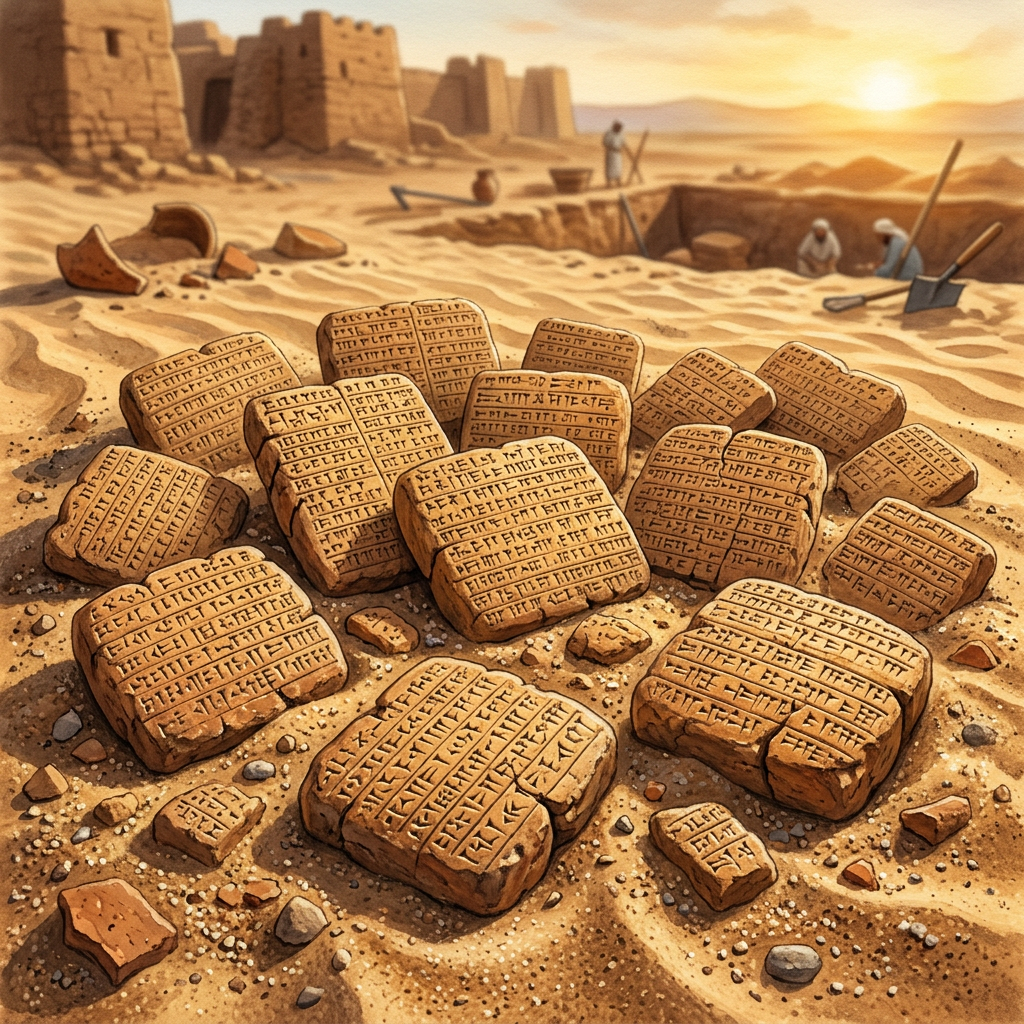
Archaeologists excavating the ancient Sumerian city of Girsu have discovered a rare cuneiform archive dedicated entirely to the administration of the salt-tax. The find consists of over 400 clay tablets detailing the volume of brine collected from marshes and the subsequent allocation of dried salt to the royal kitchens and military garrisons. The ledgers include the names of over 100 scribes who specialized in saline resource management during the Third Dynasty of Ur.
The tablets provide a fascinating look at early economic regulations, including specific penalties for the illegal trade of non-standardized salt bricks. Researchers note that salt was as valuable as silver in Mesopotamian trade, and this archive reveals the first known instance of a state-controlled monopoly on an essential mineral. The site also yielded several bronze balance scales used by tax collectors to verify the weight of the salt shipments.