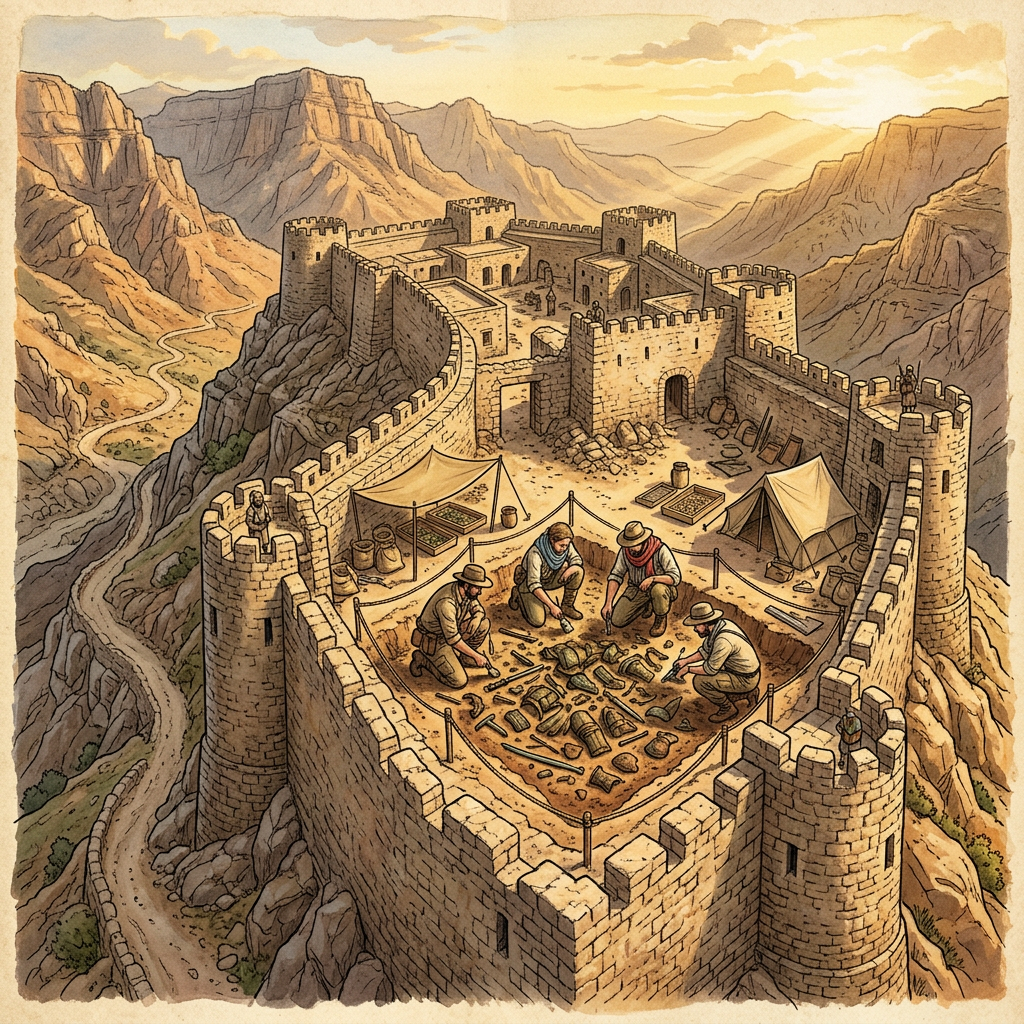
A joint team of international archaeologists has announced the discovery of a remarkably well-preserved Indo-Greek military encampment in the rugged Salt Range of northern Punjab. Dating to the 2nd century BCE, the site provides a rare glimpse into the strategic expansion of the Greco-Bactrian kingdoms into the Indian subcontinent. The excavation revealed a fortified perimeter wall built using local limestone, surrounding a series of barrack-like structures that housed both Greek and local soldiers.
Artifacts recovered from the site include bronze spearheads, iron arrowheads, and a collection of silver coins minted during the reign of Menander I. Perhaps most significant was the discovery of a small communal shrine featuring a fusion of Hellenistic and local Gandharan motifs, suggesting a high degree of cultural integration within the military ranks. This outpost likely served as a key checkpoint for monitoring trade routes passing through the Jhelum River valley.