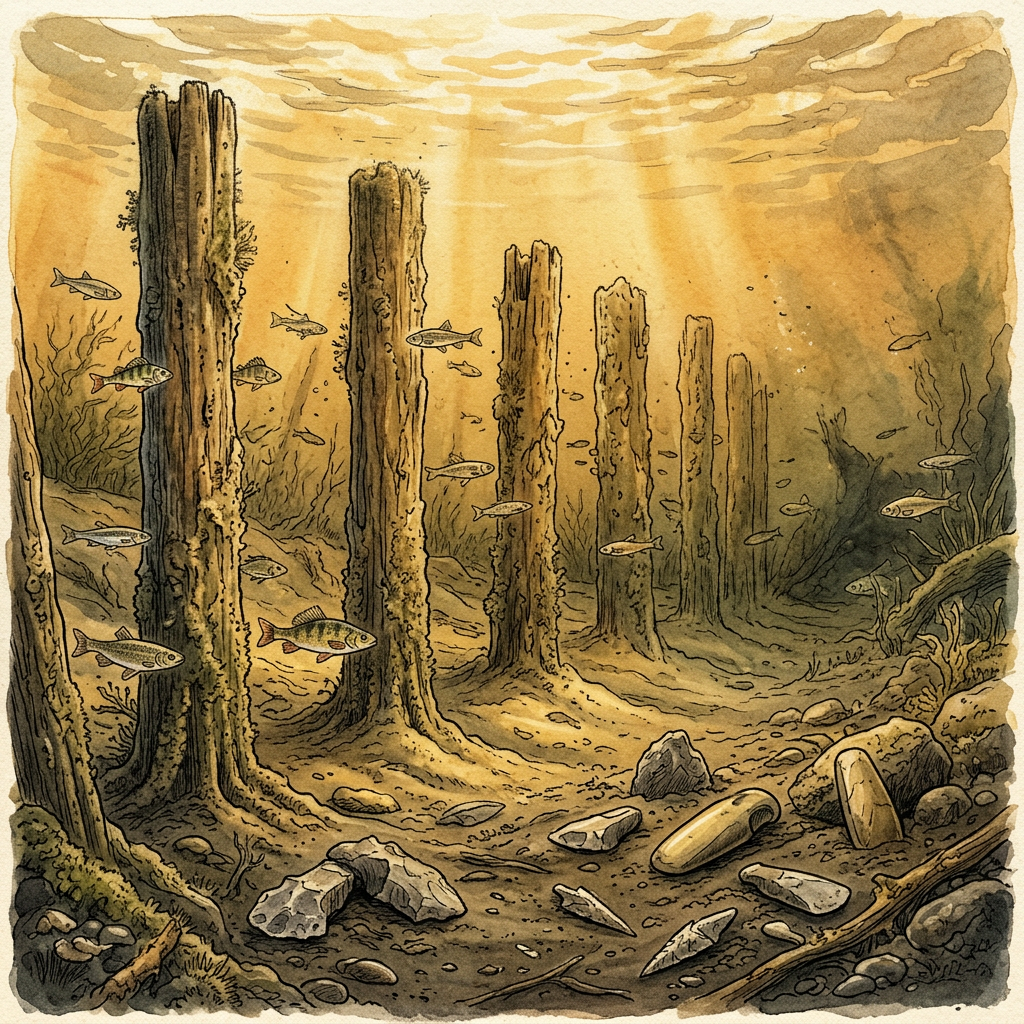
In the shallow waters of Lake Garda, researchers have identified the remains of a 9,000-year-old Neolithic village featuring incredibly well-preserved wooden pile dwellings. The anaerobic environment of the lake's sediment has prevented the wood from decaying, allowing archaeologists to see the exact construction techniques used by some of Europe's earliest agriculturalists. The site consists of over 200 individual wooden posts that once supported raised huts.
Along with the structural remains, the team recovered woven willow baskets and flint tools that were still attached to their wooden handles. This discovery provides a rare look at the daily lives and architectural ingenuity of early Holocene communities in the Alpine region. The site is now being protected as a key link in understanding the transition from nomadic lifestyles to permanent, water-based settlements in Southern Europe.